wilderness God
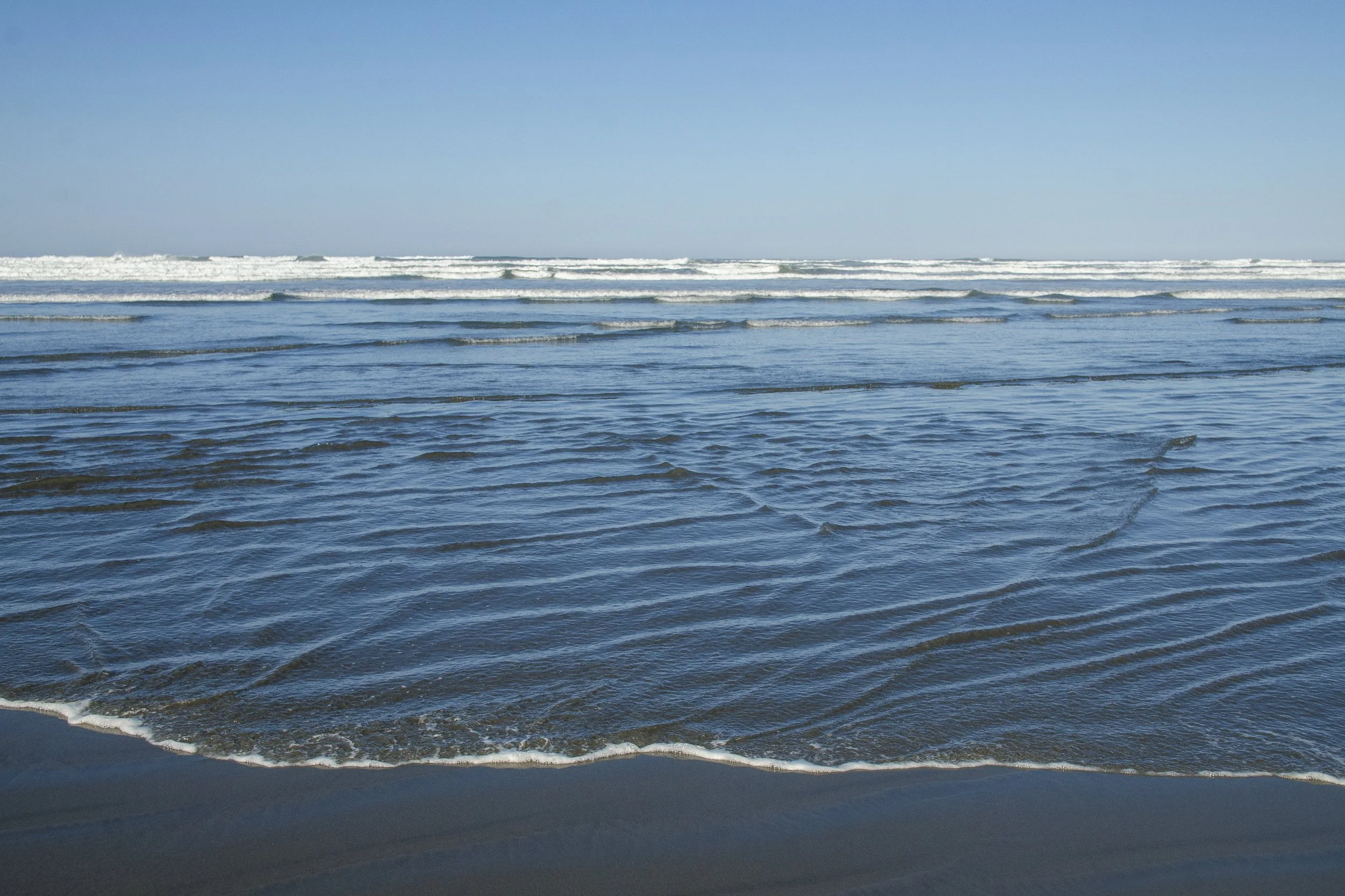
/There’s no escaping the long thread of wilderness (along with its close counterpart, exile) that runs through the Bible from beginning to end. Even before the Creation took shape, there wasn’t nothing—there was wilderness. Chaos, darkness, an untamed place waiting to be forever changed by the breath of God.
Adam and Eve, upon their infamous fall in Genesis 3, were exiled into a wilderness outside the curated Temple Garden that was Eden. Cain, upon murdering his brother, was banished even further out into “the land of wandering.” Humanity was scattered from Babel in confusion; the world was returned to a precreation wilderness state in the flood; Noah and his family became exiles, floating on the chaos waters while it rained for 40 days and 40 nights.
Immediately after being chosen and promised a land, Abraham self-exiled to Egypt, foreshadowing all the times his sons and grandsons and great-grandsons would do similarly: Isaac became a refugee of famine in Gerar; Jacob had to flee his home country for fear of Esau; Joseph, Jacob’s favorite son, was sold into slavery in Egypt and then followed by his father and all eleven brothers when they, too, became exiles because of famine. Moses was banished from his people into the household of Pharaoh for the first 40 years of his life, and then became a sheepherder in the wilderness of Midian for 40 years after that—fleeing the consequences of bloodshed, like Cain. He became the leader of the entire people of Israel out of bondage in Egypt and into . . . yet another wilderness, for yet another 40 years.
This is all just in the first two books of the Bible. We haven’t touched on David fleeing from Saul, or the Babylonian kingdom literally marching the children of Israel into exile in chains, or Jesus going straight from His baptism into the wilderness for 40 days and 40 nights to be tempted by the Adversary.
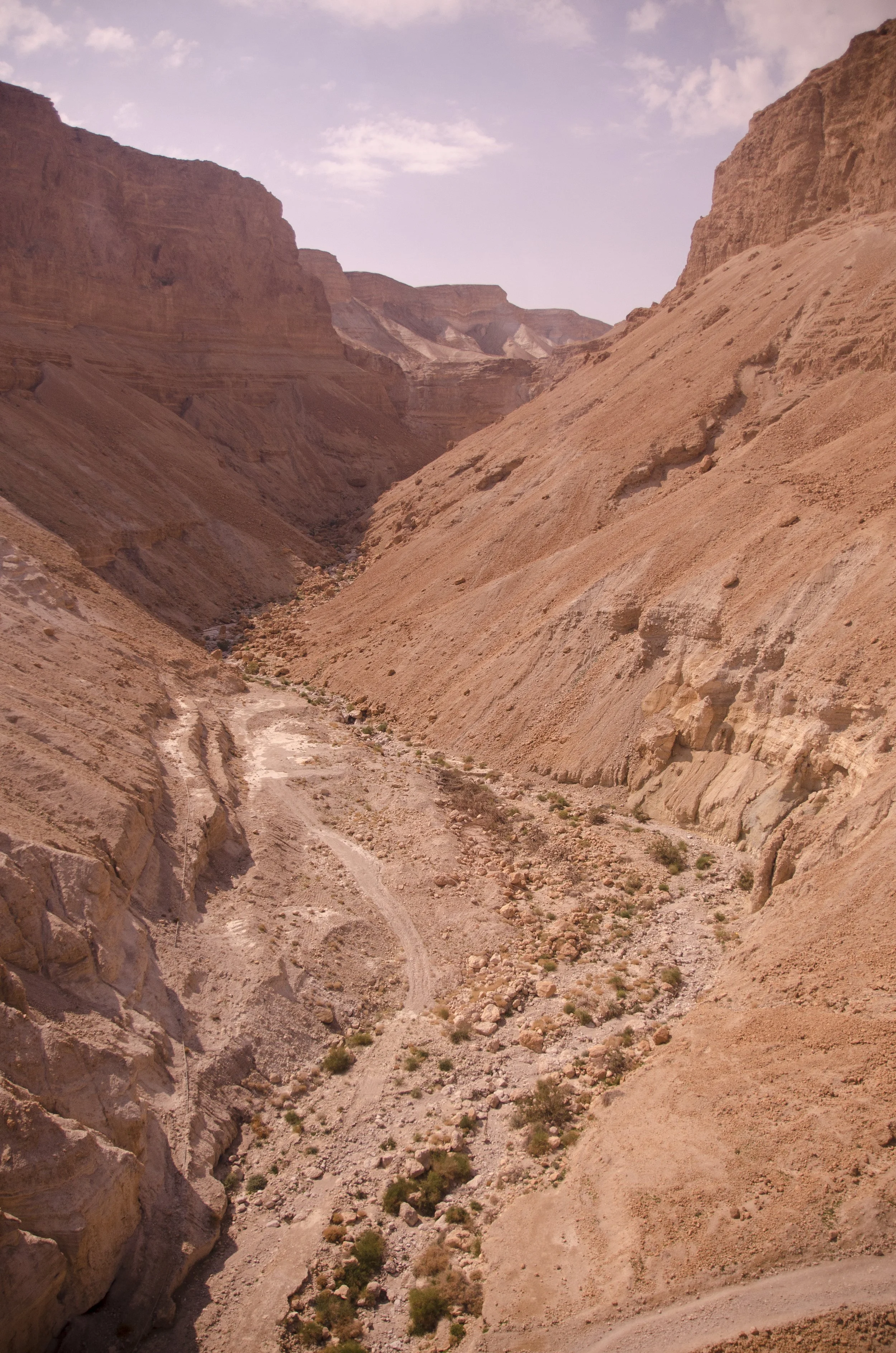
For some reason, the wilderness matters—and not just because it’s evidence of a sin-tainted humanity. Remember, the wilderness was there first.
The Bible calls the first pre-human wilderness not evil, not bad, but “formless” and “void.” It is less than ideal because it’s disordered and not yet what it was meant to be. It’s waiting for something to happen that will fundamentally alter it.
For the breath to hover over the waters (Genesis 1, 8).
For the angel to come and wrestle (Genesis 32).
For the bush to be set ablaze, yet never burned up (Exodus 3).
The wilderness is as key to the plotline of any given human life as it is to the plotline of the Bible, and what the Greater Story tells us again and again is that it is not a place we go alone. When Adam and Eve were sent out from the Garden, we think they were punished by the withdrawal of God’s presence—and yet, in the very next chapter, Cain and Abel are communing with God (Genesis 4). When Cain is banished to the land of Nod, God Himself sets on him a mark of guardianship and protection so that he won’t receive the just desserts of murdering Abel (Genesis 4:15). It’s on the run from Esau that God blesses Jacob (Genesis 28) and on the run from Pharaoh that He gives His personal name to Moses (Exodus 3). He actively leads the children of Israel by fire and cloud out of Egypt and through the Sinai desert (Exodus 13).
All this, from the God who supposedly threw Adam and Eve out of His presence back in Genesis 3.
Clearly, that’s not how it works. He is not only the God of Eden or the God of the Temple.
He is God of the wilderness, too.
When all the people were being baptized, Jesus was baptized too. And as he was praying, heaven was opened and the Holy Spirit descended on him in bodily form like a dove. And a voice came from heaven: “You are my Son, whom I love; with you I am well pleased.” . . . Jesus, full of the Holy Spirit, left the Jordan and was led by the Spirit into the wilderness, where for forty days he was tempted by the devil.
Luke 3:21-22, 4:1-2a
Can you see the beginnings of Creation-over-again? The Spirit over the waters. The Voice from heaven. Jesus, the True Human that Adam and Eve could not be.
And yet the first place He goes is not into the Holy of Holies with God, to the place and status that our first ancestors lost. It’s to the wilderness. And the wilderness, thus occupied by the Trinity, becomes Eden—and Genesis 3 is rewritten with the ending it ought to have had, this time in the desert-made-sanctuary.
We, too, occupy this story, and so even after Christ’s victory we don’t get to live wilderness-free lives. We will all find ourselves in small and great exiles, mini and vast deserts. Chaos and emptiness continue to pock the created world and its history and perhaps, instead of asking why God lets us so suffer, the real question is Why—and how incomprehensible it is!—does God go with us?
We fail, and God follows us out of Paradise.
We sin, and God meets us where we’re hiding.
We are wronged, and God settles in beside us to refute the accusations of the devil.
Our wildernesses become temples because God is there.
“The poor and needy search for water,
but there is none;
their tongues are parched with thirst.
But I the Lord will answer them;
I, the God of Israel, will not forsake them.
I will make rivers flow on barren heights,
and springs within the valleys.
I will turn the desert into pools of water,
and the parched ground into springs.
I will put in the desert
the cedar and the acacia, the myrtle and the olive.
I will set junipers in the wasteland,
the fir and the cypress together,
so that people may see and know,
may consider and understand,
that the hand of the Lord has done this,
that the Holy One of Israel has created it.”Isaiah 41:17-20
We are not always in the wilderness because of God’s judgment. It’s not always a bad place or the result of evildoing. No, even the Israelites who were exiled to Babylon—which was a judgment—were encouraged to live good lives in their unideal circumstances, to continue to participate in the Edenic vision of creation and kingdom (Jeremiah 29:5-7).
But we are always meant to be looking, praying, waiting for the Wilderness God to make a move.
Divine breath. A dream. A fight. A burning bush. The Holy Spirit, the very presence of God.
You’re still standing in the same place, but suddenly this wasteland is holy ground. Maybe there’s even water, or a green thing growing, a sign of life.
Maybe you are being made new.
“Forget the former things;
do not dwell on the past.
See, I am doing a new thing!
Now it springs up; do you not perceive it?
I am making a way in the wilderness
and streams in the wasteland.”Isaiah 43:18-19