can a woman be a foot-washer?
/Thanks to my sister’s heads up, I discovered that a question I submitted months ago was answered on the “Ask N.T. Wright Anything” podcast this week. The question was not “Can a woman be a priest?”—I’ve already heard some of Wright’s thoughts on that—but it was related to holy orders, and it gave me food for thought as I continue to mull this question.
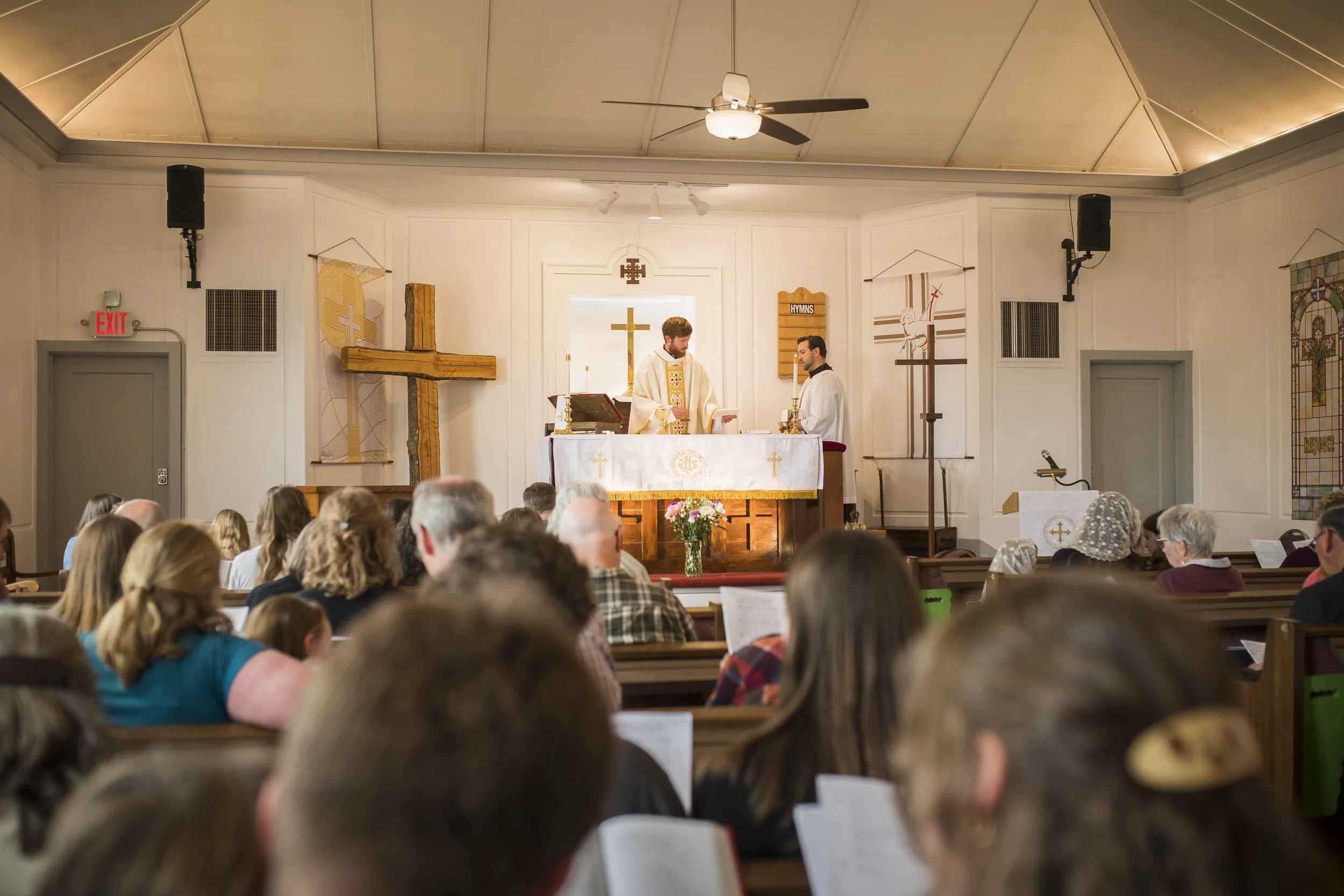
Perhaps the premise of my question is completely wrong. Questions about what women “can” and “can’t” do in evangelicalism are premised on power dynamics: When a woman can’t be a pastor, preacher, or elder, it has real-life implications for her life in the church and how she is treated and viewed by others. This is indisputable. When she can, it’s judged harshly as an overstepping of her role (in complementarian circles) or celebrated as a sign that men don’t have the universal upper hand in the church (in egalitarian circles).
But holding in tension the fact that a pastor or priest has the power of influence just by being the pastor or priest and the reality that the role is meant to be least in the church, not greatest, is where I keep struggling. Asking “Can a woman be a priest?” might sound more like “Can a woman be in charge?” than “Can a woman be a servant?”, but that’s because we start with a wrongheaded understanding of church leadership in general.
Wright said, in his response to my question, that the aspiration and ultimate fulfillment of every priestly calling is embodied in that priest kneeling before his parishioners to wash their feet. As priesthood in Leviticus was the unglamorous job of butcher, blood spiller, and meat roaster, priesthood/pastoral care today should be the unglamorous job of sacrificing self for the sake of the Church. There is a holy privilege in it, of course, but the cost is high—it’s more like parenthood than power.
When done well, that is. Which, sadly, is rare.
(As an aside: Perhaps it’s not surprising that so much of evangelical culture has historically viewed parenthood and power as very similar things.)
Nonetheless, it gives me pause. I wonder what the nondenominational evangelical church could learn from the Biblical vision of pastoral care—and how its structure might change if leading a church looked more like the thankless job of parenting children than the glory of a pulpit. I wonder how I might word my question differently to reflect the reality of right priesthood more accurately.
Can a woman be a foot-washer?
Can a woman be a bondservant of parish “children”?
Can a woman go to the end of herself for others, for the sake of the Gospel?
If I look at the many devout Christian women across my life, I’d say of course she can—but she’s already doing far more than her share of these kinds of activities. In church, at least, let her be served.
To reach anything like an accurate reflection of these truths, churches and individuals would need to radically alter how they treat and speak about men and women. Less “headship” and “submission,” more “lay down his life.” We inadvertently (or, sometimes, advertently) emphasize the exact opposite of Paul’s intent—the exact opposite of the truth—when we teach these passages in this way, and thereby create a culture of power hunger and oppression that perfectly mirrors the culture of the lost world.
What appeals to me about a position like pastor or elder? Frankly: being seen, heard, and respected.
What appeals to me about a position like a priest or deacon? I’d say walking intimately with Jesus while helping others do the same.
Here’s the thing. All humans, including women, should be seen, heard, and respected—whether they are pastors, elders, or laypeople. Women can and do walk intimately with Jesus while helping others do the same.
Can a woman be a foot-washer? She already is.
Perhaps the real question is, how many men can be priests?