from Sabbath to New Eden
/It is Holy Saturday, the seventh day of this long and fraught week. On this day in Genesis 2, after the creation of the world, the Creator rested.
On this day 2,000 years ago he rested again in the sleep of death—yes, once again, after a work of creation. Just not the one anyone was expecting.
After the pattern of Sabbath is marked out in Genesis 2, a second account of the creation of the world begins:
Then Adonai, God, formed a person from the dust of the ground and breathed into his nostrils the breath of life, so that he became a living being. Adonai, God, planted a garden toward the east, in Eden, and there he put the person whom he had formed. Out of the ground Adonai, God, caused to grow every tree pleasing in appearance and good for food, including the tree of life in the middle of the garden and the tree of the knowledge of good and evil.
A river went out of Eden to water the garden, and from there it divided into four streams. The name of the first is Pishon; it winds throughout the land of Havilah, where there is gold. The gold of that land is good; aromatic resin and onyx stone are also found there. The name of the second river is Gichon; it winds throughout the land of Kush. The name of the third river is Tigris; it is the one that flows toward the east of Ashur. The fourth river is the Euphrates.
Adonai, God, took the person and put him in the garden of Eden to cultivate and care for it. Adonai, God, gave the person this order: “You may freely eat from every tree in the garden except the tree of the knowledge of good and evil. You are not to eat from it, because on the day that you eat from it, it will become certain that you will die.”
— Genesis 2:7-17, CJB
I’ve spent a great deal of time in the Garden of Eden over the last six weeks: the garden where God began his kingdom project, where he made sacred space to dwell, where he placed his first self-likeness to represent him and co-rule with him. It was a place of abundance, blessing, and gift; a place of rest, riches, and promise. Even the perfection within the garden’s borders was meant to spread beyond, and we are tantalized with the descriptions of Havilah, Kush, and Ashur, the mysterious lands where life-giving rivers meander and wind. The Kingdom was always intended to expand.
Daily we are reminded how far the image-bearers fell short of their holy vocation. There are sicknesses, deaths, homeless encampments, abused children, wars, autocrats, billionaires, slave laborers, and people who are starving. Instead of growing outward in glorious partnership between God and human as they explored and tamed and cultivated the wild lands of gold and gemstone, the borders of the garden named “Delight” (‘Eden) and the gate leading to the Tree of Life were closed by cherub and flaming sword. The human, having willfully broken communion with the Creator, was not to be allowed back in—banished, instead, to a wilderness now poisoned with death because of his sin.
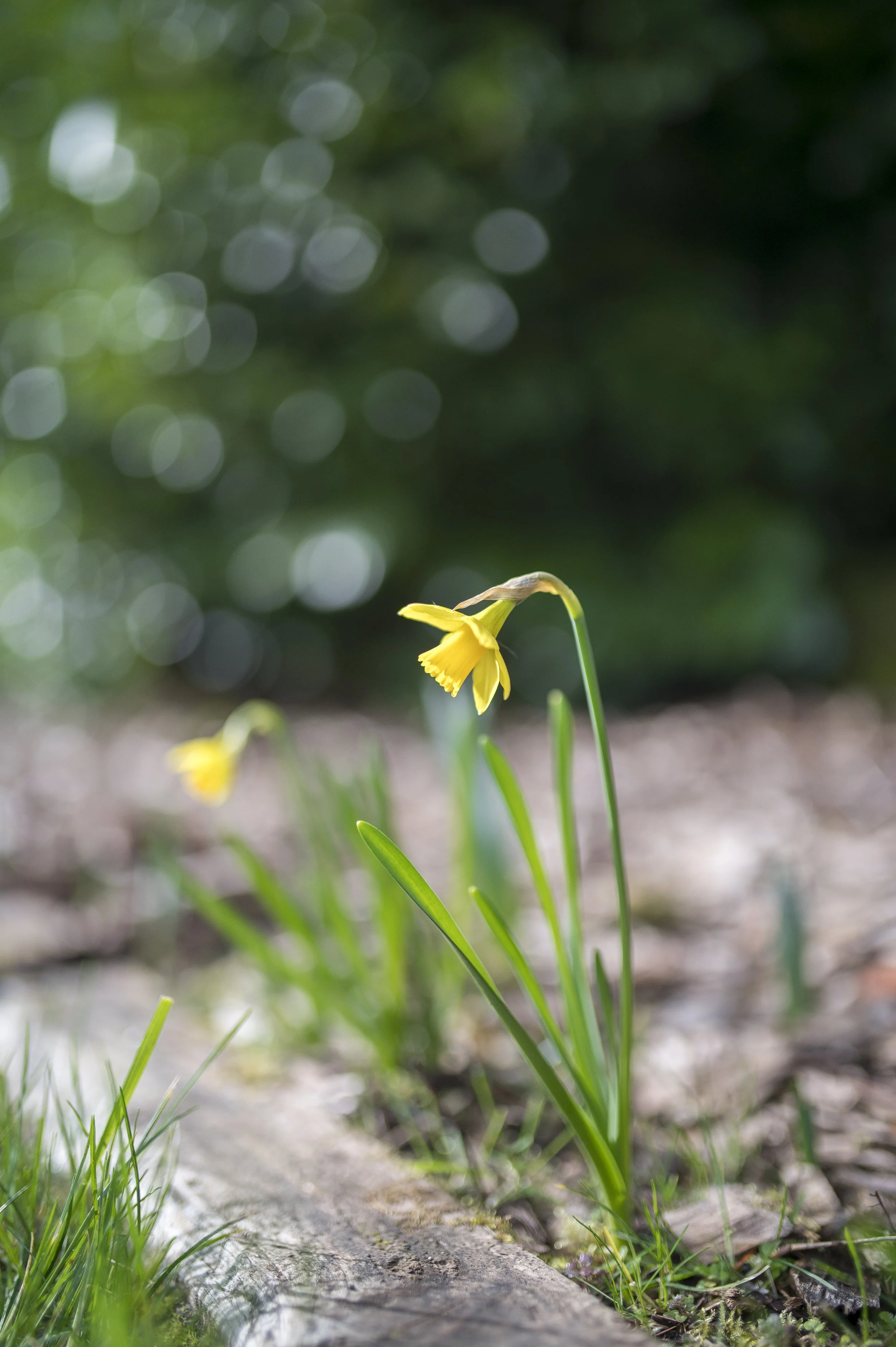
In Holy Week we are drawn back into garden spaces: First, to the garden named “Olive Press” (Gethesemane) where the Messiah was wrung out in prayer, crushed under the anticipation of his fate, and betrayed. And then, after Jesus drank the cup of death, to an unnamed garden mentioned only by St. John:
Now there was a garden in the place where Jesus was crucified, and in the garden a new tomb in which no one had yet been laid. And because it was the Jewish day of Preparation and the tomb was nearby, they placed Jesus there.
— John 19:41-42
Jesus was crucified—hung on a tree of death, to put it plainly—in a garden.
And in a garden like the place Adam was made the first (doomed) image of God, Jesus—the true and perfect Image, the Son of Man—was laid to Sabbath rest, barricaded by stone and guard, and for an instant the cosmic enemy rejoiced that his Genesis 3 plan to overthrow Creation had succeeded.
Adam, and any hope left for Adam’s heirs to return to the Garden of Eden, was destroyed.
Until.
Early on the first day of the week, while it was still dark, Mary Magdalene went to the tomb and saw that the stone had been removed from the entrance. . . . Mary stood outside the tomb weeping. And as she wept, she bent down to look into the tomb, and she saw two angels in white sitting where the body of Jesus had lain, one at the head and the other at the feet. “Woman, why are you weeping?” they asked. “Because they have taken my Lord away,” she said, “and I do not know where they have put Him.” When she had said this, she turned around and saw Jesus standing there. But she did not recognize that it was Jesus. “Woman, why are you weeping?” Jesus asked. “Whom are you seeking?” Thinking He was the gardener, she said, “Sir, if you have carried Him off, tell me where you have put Him, and I will get Him.” Jesus said to her, “Mary.” She turned and said to Him in Hebrew, “Rabboni!” (which means “Teacher”). “Do not cling to Me,” Jesus said, “for I have not yet ascended to the Father. But go and tell My brothers, ‘I am ascending to My Father and your Father, to My God and your God.’”
— John 20:1, 11-17
If Genesis 1-3 is the beginning of Creation, John 20 is the beginning of New Creation. We are not in Eden anymore; it is no longer Sabbath, but rather the “first day of the week” in another kind of garden. Adam is long dead, but the New Adam is alive. The stone is rolled away! The flaming sword that rendered impassable the path back to God’s presence has been utterly removed by the Son of Man, the only Image worthy of walking straight through it. He who hung accursed on the tree of death has become the fruit of the Tree of Life.
And the first person to meet him in New Creation history is Mary of Magdala—who, initially, supposes him to be the gardener.
I love that detail. She’s not wrong. Mary of Magdala may not realize it until she hears him say her name, but she is the new Eve in the new Eden meeting the original Gardener of the original Eden and the New Adam of the New Creation at the same time. She is our very first glimpse of the Church, the Bride.
And she is the first to expand the borders of this new Eden out into the wilds beyond.
Mary Magdalene went and announced to the disciples, “I have seen the Lord!” And she told them what He had said to her.
— John 20:18
If we remember anything this Resurrection Day, let it be that our Bridegroom is alive, and we live in New Creation now. Our life’s work is to push the borders of his Kingdom outward, not by winning battles in the old way—fighting, arguing, going to war, trying to out-gun or out-snark those we see as “God’s enemies”—but by participating in the Grand Reversal of Christ’s example.
He came on a donkey, not a war horse. There is no place for violence in this kingdom.
He was lifted up on a cross, not a throne. There is no place for pride in this kingdom.
He was crowned with thorns, not gold and jewels. There is no place for greed in this kingdom.
He entrusted the Gospel first to a woman. There is no place for sexism in this kingdom.
He expands his borders by cultivating gardens and hosting banquets. There is no place for war in this kingdom.
Tomorrow, we awaken as members of a new family and citizens of a new nation. We awaken as children who share a Father with Jesus, as royal priests in a new kind of temple, bearing God’s image and God’s sacred presence within ourselves. We awaken on the first day of the week to a world entirely remade.
Thanks be to God!