a kingdom of children

I started reading a recently-released book this week called The Dignity of Dependence. I’m only four or five chapters in, but it’s been a thought-provoking read, especially insofar as it emphasizes 1) that women are different from men and 2) that women are also less different from men than we think, because we tend to start from a false premise of what a human being is.

The false premise is that humans are autonomous creatures who control their identities, destinies, and day-to-day lives, independent of anyone else. In our society, the more independent you can be, the more human you are; the less help you need, the more valuable you are. I’m an oldest daughter—this is my native tongue. (Just ask my therapist.)

It’s not shocking, then, that we so easily throw away certain classes of people: unborn babies, those with disabilities or mental health crises or addictions, the elderly.

We have built a society on something that doesn’t exist and now we are all trying to cram ourselves into its mold. Men can do this more successfully because they are more separable from their children and less influenced by cyclical changes in their bodies, but they can never really do it successfully. No one can (not even oldest daughters). We are all dependent: on the weather, on events outside our control, on how and when and where and to whom we were born, on our energy levels, on our resources, on the other people around us who keep the world running while we play our very small part.

The ruse is easier to uphold now than ever. I’m reading through the Little House series by Laura Ingalls Wilder with Clara, and as we began The Long Winter, it struck me how utterly helpless the Ingalls family must have felt to have no advance notice of when the next blizzard would strike, how long it would be, or how much snow would fall. They had no radar or satellite or meteorology team tracking every “atmospheric river” and irregular storm pattern. They had minutes to get to shelter when the cloud appeared in the north sky. Even the old Native American man who warned them of the hard winter to come—based on centuries of living intimately with the land and observing its patterns—could only give a general alert about the season as a whole, no weekly or daily or hourly forecast.

Now, we can order our lives so that the weather affects us less, but it is still a force outside our control, as wildfire season and hurricane season annually remind certain portions of the U.S. and the world. In my part of the country, one of the most disturbing eventualities that no one can fully predict is “the Big One”—the massive earthquake that could happen at any time along the Cascadia Subduction Zone. We are loathe to admit how many such forces exist in our well-oiled machine of a society, and how perilously we all traverse the line between comfortable autonomy and desperate helplessness. Men in general have a better shot at keeping up the pretense, but they also have the loneliness, depression, chronic pain, and addictions to show for it.

Women can only so pretend if they deny the fundamental difference that makes them women: the ability to give and sustain life from conception through weaning, and then nurture the physical, emotional, and spiritual needs that continue to form a human being into a whole person in the years beyond. This difference is rooted in the very things that our society deems less human, less valuable: her body’s comparative weakness and limitations; her cyclical hormone changes; her vulnerability to becoming, at some point in her reproductive life, an irreplaceable half in a dyad of dependence.

And plenty of women do choose denial. They take medications to stop menstruating and prevent pregnancy. They abort babies, often including babies they want, because they lack any support system that would allow them to be that “tied down.” They send their newborns to daycare and use hands-free breast pumps to get through the work week—often with very little choice, due to the way our economy is structured.

Anything to avoid acknowledging (or worse, causing someone else to notice) that which looks like need, dependence, helplessness.

Anything to avoid being human—a creature imaged after the Architect of Sabbath rest, the endlessly interdependent Triunity.

I wonder what our culture could look like if we swapped our hyper-American definition of humanness and success for a more accurate and more Christian one.

Following Jesus is built on the acknowledgement of need and neediness. A Jesus-follower is aware of her own need—for deliverance, for guidance, for spiritual food, as well as for the New Creation community the church is supposed to be—and compassionate toward the neediness of others, especially those society deems least worthy. There’s not a lot of room in Christianity for bowing to the false god of independence, which is really just another guise for the god of self and the sin of pride.
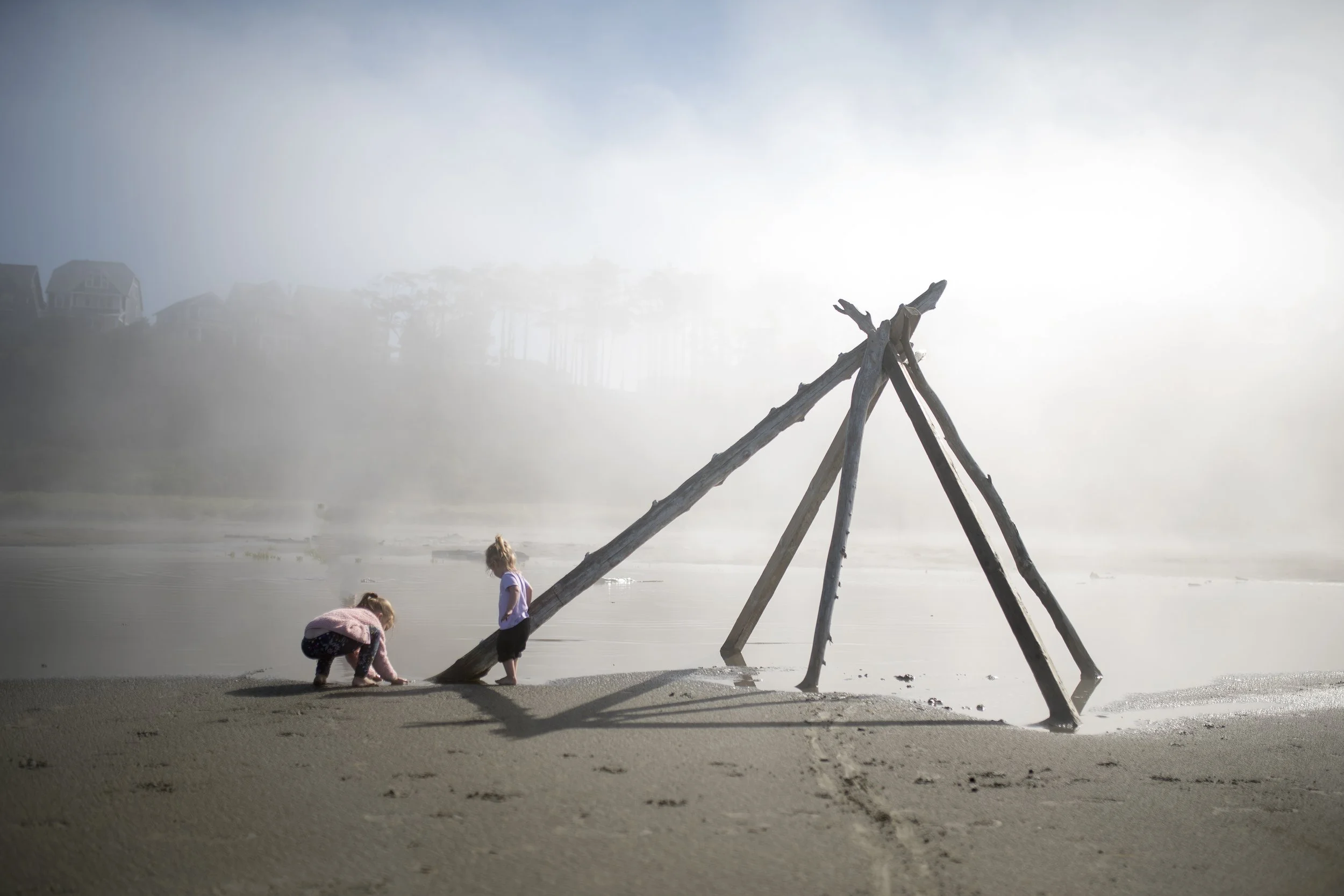
Of all places in our world, the church should be the most welcoming to those who are dependent. To the old and infirm. To the physically disabled. To the depressed, the panicked, the addicted, the hungry, the homeless. To the babies and the children. To the women.

Jesus said of the little children, “The kingdom of heaven belongs to such as these”—to such as are dependent, needy, of least value in a worldly sense, but most attuned to the real world beyond the veil.

The kingdom of heaven is not for the powerful or the productive or the ones who can best separate themselves from their own human needs, or the irritating neediness around them. It does not belong to the Donald Trumps or the Elon Musks or the Doug Wilsons. It’s not a place that Herods or Pharisees will feel at home.

It is for children. For big-eyed, trusting babies who never doubt for a moment that they will be fed when they cry. For men who can fear not their true human dependence. For women who learn to embrace theirs as a gift, a picture of Jesus who selflessly nourishes His church from His own body.

It is a better Eden fitted for a better Adam and Eve, a tabernacle with the veil torn in two, a temple with no need for an outer court to contain the unworthy rabble. God in Christ Jesus flings open the gates and His hand of abundance feeds us all—rich or poor, able or unable, employed or unemployed, citizen or foreigner, police or prisoner, male or female, old or young.

In that kingdom,

The wolf will live with the lamb,
and the leopard will lie down with the goat;
the calf and young lion and fatling will be together,
and a little child will lead them.

The cow will graze with the bear,
their young will lie down together,
and the lion will eat straw like the ox.

The infant will play by the cobra’s den,
and the toddler will reach into the viper’s nest.

They will neither harm nor destroy
on all My holy mountain,
for the earth will be full of the knowledge of the LORD
as the sea is full of water.

Isaiah 11:6-9

I have often envisioned this very literally. A literal lion hanging out with a literal calf. And I wouldn’t be surprised to see such in the New Earth.

But this is about the coming of the Messiah, the Branch of Jesse, which happened two thousand years ago. This prophecy is not just for our next life—it’s a vision of the kingdom of heaven here, and what we ought to have been doing for the last 2,000 years.

Who is a lion? In the Bible, usually a king, or a person of power. Who is a snake? A deceiver or an agent of the Enemy. And who is a child? A Jesus-follower, a citizen of the kingdom.

The vision of Christ’s kingdom is one of the powerful and the powerless dwelling together in peace and joy and mutual need in the presence of the Lord, all following the wisdom of childlike trust and vulnerability. We are all less different, less separate than we think.

It’s a glorious vision that demands a total reshaping of our values and the stories we tell about ourselves. We must learn to see ourselves not as gods in our own mythologies or main characters in our own novels but as children, as fearless as my two-year-old for the trust we have in the one who empowers, feeds, and protects us. We must learn to see ourselves first as human, and human together.

I once read a poem that ended with these three lines, and I haven’t been able to shake them since, so I leave them with you:

and Babylon will fall
to a kingdom of children
who play at the adder’s den.

approaching God who approaches us

The Advent of the Christ was just a purple candle on a Sunday morning for the first 30 years of my life, and I’m still learning to pause and hold the tension of joy-with-penitence of this “little Lent” before rushing straight into tinsel and carols and holly-jolly cheer the day after Thanksgiving. What is joy with penitence? What does it mean to fast in preparation for a feast, or to sorrowfully reflect while at the same time growing in anticipation for the arrival of the King?

The calendar moves us toward Jesus, toward Christmas. Jesus moves toward us in the miracle of the Incarnation. Heaven and earth are set on a collision-course that will blow up the trajectory of history and should likewise alter the course of our lives. The King is coming, and we are ill-prepared, sin-filled, unworthy to welcome him—sorrow. The King is coming, and He is our loving Father and our salvation—joy.

Advent is like the cool of the day in Eden, that time of the evening breeze when God walked in the garden (Genesis 3:8). His approach would have been pure joy, but for the failures of His imagers. Adam and Eve hide like guilty children waiting to be caught by their parent, unsure what the reaction will be, but expecting it to be bad. Instead of joy, sorrow. Within three pages the whole-goodness of God’s presence for humans has been corrupted by sin, and the whole-joy of His approach has been corrupted by fear.

“Where are you?” (Genesis 3:9b)

“I heard you in the garden, and I was afraid because I was naked; so I hid.” (Genesis 3:10)

I was afraid because I was naked. I was ashamed of myself. I was not worthy to receive you.

We’ve all been there. We reflect for two minutes on the scandal of the Incarnation and we are there: naked, ashamed, unworthy, afraid. How can we approach this God? The instinct is to hide, to lie, to cover ourselves up.

But this glimpse of Advent in Genesis is a glimpse of the joy in our own little Lent, for the King does not laugh at His wayward children; He does not lose His temper; He does not destroy them or abuse them or beat them down. He holds His boundary—and at the same time He covers their shame.

The Lord God made garments of skin for Adam and his wife and clothed them. And the Lord God said, “The man has now become like one of us, knowing good and evil. He must not be allowed to reach out his hand and take also from the tree of life and eat, and live forever.” So the Lord God banished him from the Garden of Eden to work the ground from which he had been taken.

Genesis 3:21-23

We pause in Advent deeply aware of our spiritual nakedness and deeply grateful for God’s generous provision. We can approach Him, unhiding, because He approached us not as a mighty warrior-king but naked and humble Himself, a suffering Servant offering us robes of righteousness. We have a place now in His temple court because He became the fruit of the tree of life by hanging, cursed, on a tree of death.

Of Him we take and eat, and live forever.

can a woman be a priest?

You all know I’ve wrestled, and have been wrestling, hard over what it means to be a man vs. a woman in Christ’s church. I wrote out my rejection of typical evangelical complementarianism comprehensively in six parts a couple years ago, but that was a beginning, not an end. I needed to reject complementarian theology so I could make room for an exploration of right theology, rather than swing instantly to its polar opposite, which is a natural but flawed inclination.

Beginnings don’t translate very well to the internet, where any half-formed thought you hit “publish” on can be pasted over you like an everlasting scarlet letter, as if you are not in fact an ever-evolving human who is thinking and processing and wrestling with God.

Nonetheless, I claim this as another beginning—a start, not an end, at articulating my journey toward right theology of gender.

Since writing that six-part series, I have left one extremely complementarian, conservative evangelical, non-denominational church and entered into a traditional, hierarchically-structured, Anglo-Catholic leaning mainline Protestant church. Not exactly the feminist flag-waving egalitarian situation anyone expected (least of all me).

In the Anglican Church of North America, the ordination of women is an open question. It is debated among the College of Bishops. Some dioceses have decided that women should be ordained as priests; others (including mine) have decided they should not, although a woman discerning the priesthood could technically be ordained under the oversight of an affirming diocese outside her own. I don’t know which side has it “right,” but I am certain that this space of tension and debate is healthier than the prideful, fear-based shutdown of either extreme.

That’s why I remain.

When there is enough respect between the differences of opinion to hear one another’s best cases, to assume good faith, and to acknowledge there is merit in both sides, there tends to be more respect for everyone—including the women whose lives hang in the balance of the debate. For example, my priest is of the opinion that the diaconate and priesthood ought to be reserved for men, but he is also willing to learn from women. He is able to see the God-given wisdom in women. He is not afraid to discuss even the hottest of theological debates with women.

Perhaps this is what I wish complementarian pastors and Christians knew: Even if I think there are problems with the complementarian position, the biggest problem I’ve seen is a lack of respect for women (and their advocates) as thoughtful human beings who deserve to be heard—not shut down, not treated as dangerous or deceptive, not whispered about in elders’ meetings behind closed doors. If you can’t be respectful in debate, how can we trust you to respect us in any other setting?

A serious handling of the differences between men and women must be willing to see and consider the nuances of where women are welcomed in Scripture. Jesus welcomed women as apostles (John 20:16-17); Paul welcomed them as deaconesses (Romans 16:1); Philip welcomed them as prophetesses (Acts 21:9). If we are still asking questions like “Should women have any co-ed leadership positions in the church?” we are hardly having a serious debate, because clearly they should and did, and the current efforts to shut them out of preaching and teaching and leadership ministries are merely a reaction to a cultural moment, not a reflection of God’s heart or God’s Word.

But “Should a woman be a priest?” is a serious question that I’m still mulling over. There are no Jewish or Christian priestesses in the Bible, though there are women teachers, preachers, evangelists, missionaries, prophets, judges, rulers, and worship leaders. This demands us to ask further questions: “What makes a priest different from a teacher, preacher, evangelist, missionary, prophet, judge, ruler, or worship leader?” In most evangelical churches, not much: the pastor is the teacher, the preacher, the evangelist. If a woman is endorsed by God to do all those things, what stops her from being a pastor?

I think this is where being in an Anglican setting has helped me understand. The priest in an Anglican church isn’t just the person who leads the service and gives the sermon. Anyone could do that—in fact, women are welcome to lead prayer services and teach co-ed catechesis in my church. But in the communion service, the priest acts in persona Christi, “in the person of Christ,” to distribute Christ’s body and blood to the people in the Eucharist.

That’s a completely different set of responsibilities than anything else on our list.

If the Eucharist is all symbol and no sacrament—as it’s treated in non-mainline churches—then it makes very little sense to me why a woman couldn’t be a pastor. But if it is a sacrament, if there is mystery, it makes a lot of sense to me that she couldn’t be a priest.

A woman can’t act in persona Christi. Christ came as a human male, not a human female.

Christ came as the new and better Adam, not the new and better Eve—He came to correct where Adam failed, for the sake of Eve, not where Eve failed for sake of Adam. Adam’s failure was in tending to the garden as the guardian of the sacramental fruit. The priest, in persona Christi, tends the sacramental bread and wine for the Bride of Christ.

If we overgeneralize the maleness of Christ to give all men a spiritual calling or status that all women can’t have, we fall directly into the Genesis 3:16 power dynamic that Jesus lived and died to abolish. But if we erase the maleness of Christ altogether as a meaningful distinctive of why He came, we lose a vital pattern-key to exactly how He fits into the whole Biblical narrative, and what He continues to accomplish through His body and blood.

Having a priest hold up the bread and the cup each week and say, “Behold the Lamb of God. Behold Him who takes away the sin of the world. Blessed are those who are invited to the marriage supper of the Lamb,” has become a comforting reminder that God Incarnate came to right every wrong—all the way back to when Adam failed to tell Eve the whole story of the sacred trees and then stood by silent while she chose death. Sure, untold numbers of such priests and pastors have also failed miserably to protect the Bride as they ought (the ACNA’s own current archbishop being a prime example), but Jesus didn’t. Jesus loved her as His own body and laid down His life for her.

Does all this mean I think it’s wrong for a woman to be a priest? No idea. Maybe. Maybe not. I waffle between wondering how much sleep God really loses over the chromosomes of the person handing out the bread and remembering that He struck dead the two priests, Nadab and Abihu, who offered “strange fire” in Leviticus.

Either way, I trust that there is something that matters about being created male or female. Women have a distinct capability that no man can have in the bearing and nurturing of children. In the human family, only women can be mothers. Perhaps in the family of Christ, only men can be “fathers”—though sometimes the fatherhood of a priest looks more to me like mothering, as he is charged with all the motherly activities of nourishing, discipling, catechizing, nurturing, knowing, guiding, and loving the “children” who make up his parish. (And like a mother, he never gets a break.)

Or to say it another way, maybe women are made to be priests—of a different sort of church. We are the priests of the temples of our homes, a different kind of sacred space. As much as I sometimes wish otherwise, I am not replaceable in my home—my husband can help me and try his best to imitate me, but only I will ever be Mama. Only I will ever be the one who can nourish and disciple and catechize and nurture and know and guide and love like a mother.

Unfortunately, the churches that most need to wake up and have this discussion in a productive way are also the ones who have thrown the baby out with the Roman Catholic bathwater. Priests, Eucharists, sacraments, mystery—they’re all just parts of the pre-Reformation boogeyman. So I doubt this post gets much further than helping me think through my own ideas with more clarity. But that’s okay.