a kingdom of children
/I started reading a recently-released book this week called The Dignity of Dependence. I’m only four or five chapters in, but it’s been a thought-provoking read, especially insofar as it emphasizes 1) that women are different from men and 2) that women are also less different from men than we think, because we tend to start from a false premise of what a human being is.
The false premise is that humans are autonomous creatures who control their identities, destinies, and day-to-day lives, independent of anyone else. In our society, the more independent you can be, the more human you are; the less help you need, the more valuable you are. I’m an oldest daughter—this is my native tongue. (Just ask my therapist.)
It’s not shocking, then, that we so easily throw away certain classes of people: unborn babies, those with disabilities or mental health crises or addictions, the elderly.
We have built a society on something that doesn’t exist and now we are all trying to cram ourselves into its mold. Men can do this more successfully because they are more separable from their children and less influenced by cyclical changes in their bodies, but they can never really do it successfully. No one can (not even oldest daughters). We are all dependent: on the weather, on events outside our control, on how and when and where and to whom we were born, on our energy levels, on our resources, on the other people around us who keep the world running while we play our very small part.
The ruse is easier to uphold now than ever. I’m reading through the Little House series by Laura Ingalls Wilder with Clara, and as we began The Long Winter, it struck me how utterly helpless the Ingalls family must have felt to have no advance notice of when the next blizzard would strike, how long it would be, or how much snow would fall. They had no radar or satellite or meteorology team tracking every “atmospheric river” and irregular storm pattern. They had minutes to get to shelter when the cloud appeared in the north sky. Even the old Native American man who warned them of the hard winter to come—based on centuries of living intimately with the land and observing its patterns—could only give a general alert about the season as a whole, no weekly or daily or hourly forecast.
Now, we can order our lives so that the weather affects us less, but it is still a force outside our control, as wildfire season and hurricane season annually remind certain portions of the U.S. and the world. In my part of the country, one of the most disturbing eventualities that no one can fully predict is “the Big One”—the massive earthquake that could happen at any time along the Cascadia Subduction Zone. We are loathe to admit how many such forces exist in our well-oiled machine of a society, and how perilously we all traverse the line between comfortable autonomy and desperate helplessness. Men in general have a better shot at keeping up the pretense, but they also have the loneliness, depression, chronic pain, and addictions to show for it.
Women can only so pretend if they deny the fundamental difference that makes them women: the ability to give and sustain life from conception through weaning, and then nurture the physical, emotional, and spiritual needs that continue to form a human being into a whole person in the years beyond. This difference is rooted in the very things that our society deems less human, less valuable: her body’s comparative weakness and limitations; her cyclical hormone changes; her vulnerability to becoming, at some point in her reproductive life, an irreplaceable half in a dyad of dependence.
And plenty of women do choose denial. They take medications to stop menstruating and prevent pregnancy. They abort babies, often including babies they want, because they lack any support system that would allow them to be that “tied down.” They send their newborns to daycare and use hands-free breast pumps to get through the work week—often with very little choice, due to the way our economy is structured.
Anything to avoid acknowledging (or worse, causing someone else to notice) that which looks like need, dependence, helplessness.
Anything to avoid being human—a creature imaged after the Architect of Sabbath rest, the endlessly interdependent Triunity.
I wonder what our culture could look like if we swapped our hyper-American definition of humanness and success for a more accurate and more Christian one.
Following Jesus is built on the acknowledgement of need and neediness. A Jesus-follower is aware of her own need—for deliverance, for guidance, for spiritual food, as well as for the New Creation community the church is supposed to be—and compassionate toward the neediness of others, especially those society deems least worthy. There’s not a lot of room in Christianity for bowing to the false god of independence, which is really just another guise for the god of self and the sin of pride.
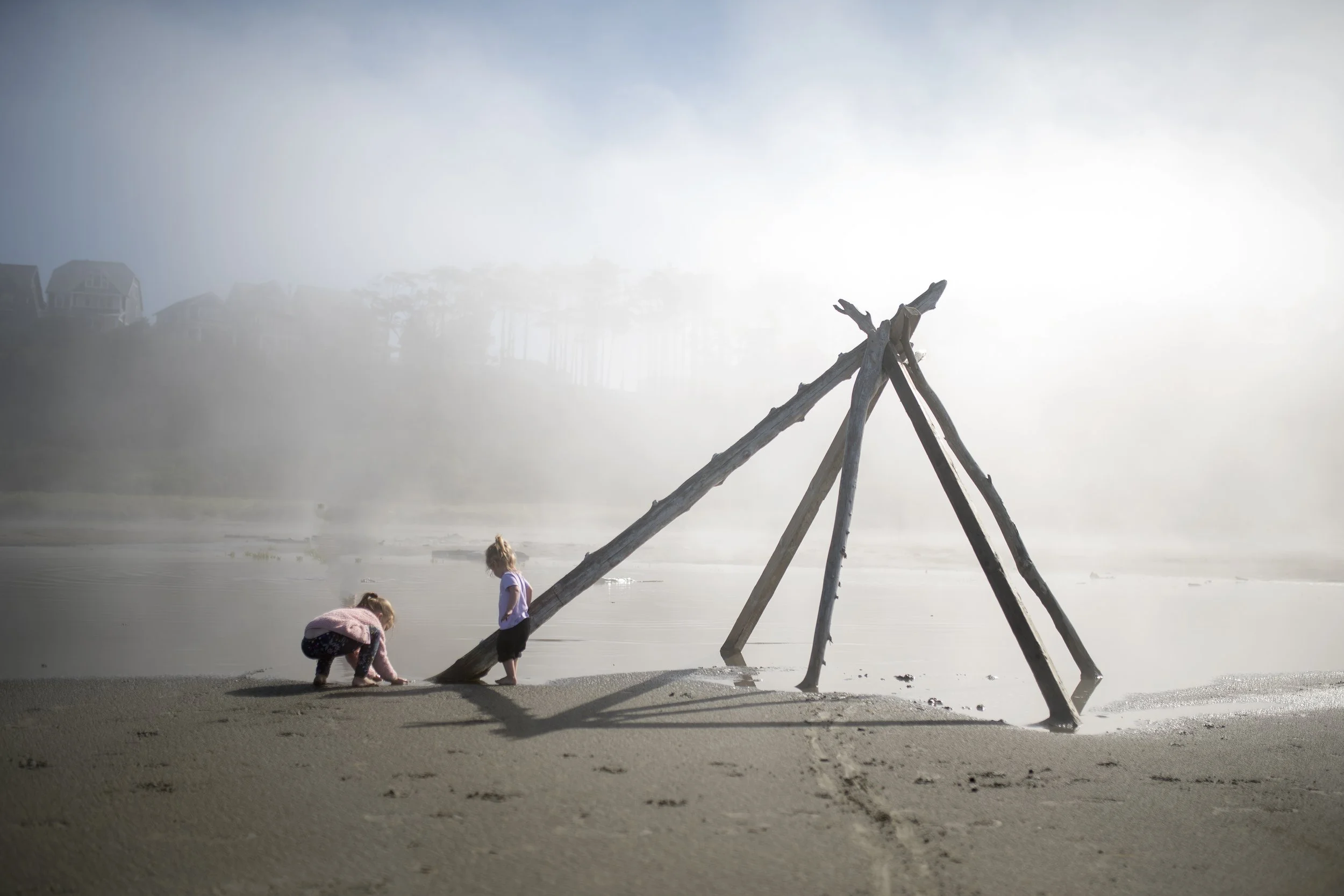
Of all places in our world, the church should be the most welcoming to those who are dependent. To the old and infirm. To the physically disabled. To the depressed, the panicked, the addicted, the hungry, the homeless. To the babies and the children. To the women.
Jesus said of the little children, “The kingdom of heaven belongs to such as these”—to such as are dependent, needy, of least value in a worldly sense, but most attuned to the real world beyond the veil.
The kingdom of heaven is not for the powerful or the productive or the ones who can best separate themselves from their own human needs, or the irritating neediness around them. It does not belong to the Donald Trumps or the Elon Musks or the Doug Wilsons. It’s not a place that Herods or Pharisees will feel at home.
It is for children. For big-eyed, trusting babies who never doubt for a moment that they will be fed when they cry. For men who can fear not their true human dependence. For women who learn to embrace theirs as a gift, a picture of Jesus who selflessly nourishes His church from His own body.
It is a better Eden fitted for a better Adam and Eve, a tabernacle with the veil torn in two, a temple with no need for an outer court to contain the unworthy rabble. God in Christ Jesus flings open the gates and His hand of abundance feeds us all—rich or poor, able or unable, employed or unemployed, citizen or foreigner, police or prisoner, male or female, old or young.
In that kingdom,
The wolf will live with the lamb,
and the leopard will lie down with the goat;
the calf and young lion and fatling will be together,
and a little child will lead them.The cow will graze with the bear,
their young will lie down together,
and the lion will eat straw like the ox.The infant will play by the cobra’s den,
and the toddler will reach into the viper’s nest.They will neither harm nor destroy
on all My holy mountain,
for the earth will be full of the knowledge of the LORD
as the sea is full of water.Isaiah 11:6-9
I have often envisioned this very literally. A literal lion hanging out with a literal calf. And I wouldn’t be surprised to see such in the New Earth.
But this is about the coming of the Messiah, the Branch of Jesse, which happened two thousand years ago. This prophecy is not just for our next life—it’s a vision of the kingdom of heaven here, and what we ought to have been doing for the last 2,000 years.
Who is a lion? In the Bible, usually a king, or a person of power. Who is a snake? A deceiver or an agent of the Enemy. And who is a child? A Jesus-follower, a citizen of the kingdom.
The vision of Christ’s kingdom is one of the powerful and the powerless dwelling together in peace and joy and mutual need in the presence of the Lord, all following the wisdom of childlike trust and vulnerability. We are all less different, less separate than we think.
It’s a glorious vision that demands a total reshaping of our values and the stories we tell about ourselves. We must learn to see ourselves not as gods in our own mythologies or main characters in our own novels but as children, as fearless as my two-year-old for the trust we have in the one who empowers, feeds, and protects us. We must learn to see ourselves first as human, and human together.
I once read a poem that ended with these three lines, and I haven’t been able to shake them since, so I leave them with you:
and Babylon will fall
to a kingdom of children
who play at the adder’s den.