can a woman be a foot-washer?

Thanks to my sister’s heads up, I discovered that a question I submitted months ago was answered on the “Ask N.T. Wright Anything” podcast this week. The question was not “Can a woman be a priest?”—I’ve already heard some of Wright’s thoughts on that—but it was related to holy orders, and it gave me food for thought as I continue to mull this question.
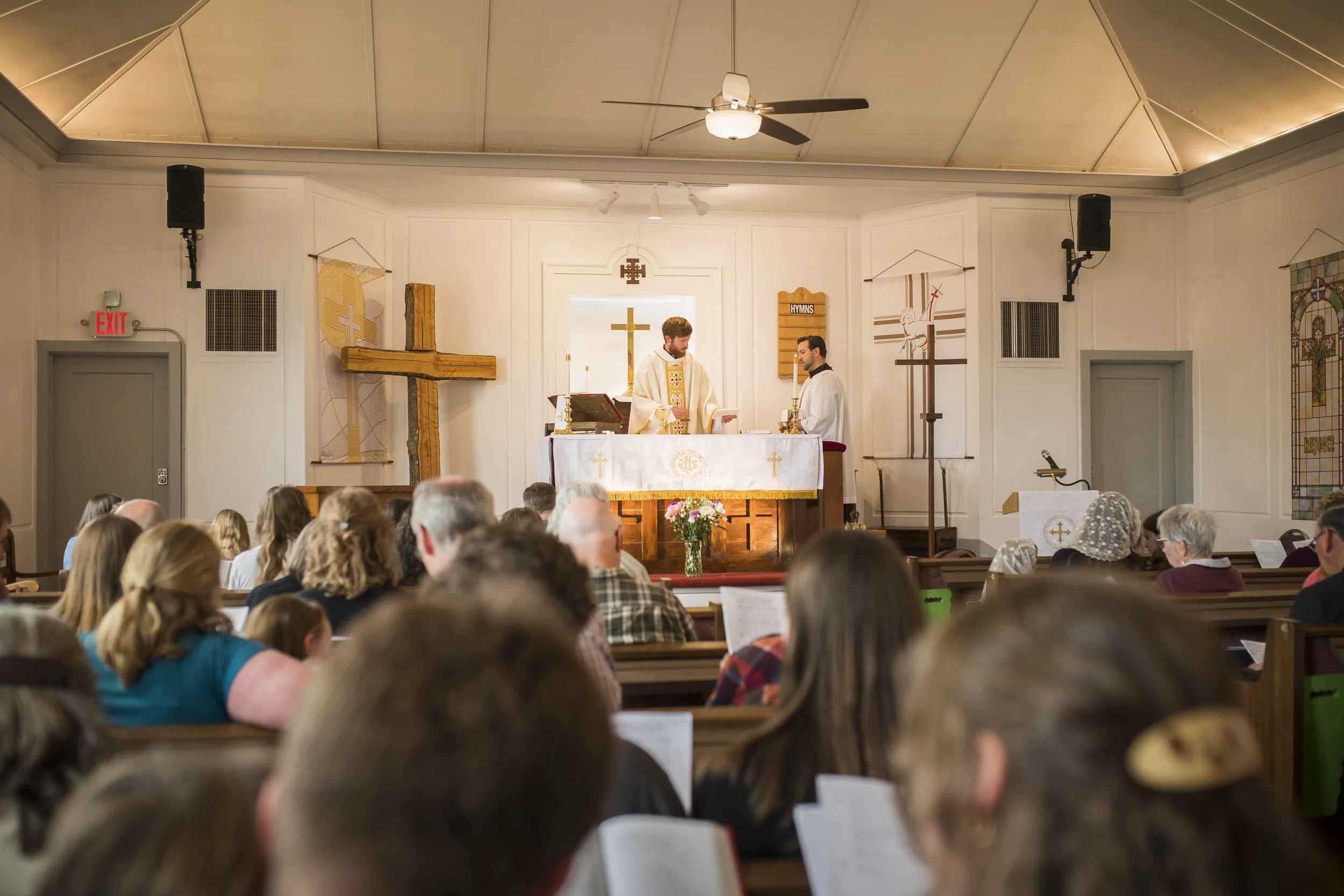
Perhaps the premise of my question is completely wrong. Questions about what women “can” and “can’t” do in evangelicalism are premised on power dynamics: When a woman can’t be a pastor, preacher, or elder, it has real-life implications for her life in the church and how she is treated and viewed by others. This is indisputable. When she can, it’s judged harshly as an overstepping of her role (in complementarian circles) or celebrated as a sign that men don’t have the universal upper hand in the church (in egalitarian circles).

But holding in tension the fact that a pastor or priest has the power of influence just by being the pastor or priest and the reality that the role is meant to be least in the church, not greatest, is where I keep struggling. Asking “Can a woman be a priest?” might sound more like “Can a woman be in charge?” than “Can a woman be a servant?”, but that’s because we start with a wrongheaded understanding of church leadership in general.

Wright said, in his response to my question, that the aspiration and ultimate fulfillment of every priestly calling is embodied in that priest kneeling before his parishioners to wash their feet. As priesthood in Leviticus was the unglamorous job of butcher, blood spiller, and meat roaster, priesthood/pastoral care today should be the unglamorous job of sacrificing self for the sake of the Church. There is a holy privilege in it, of course, but the cost is highit’s more like parenthood than power.

When done well, that is. Which, sadly, is rare.

(As an aside: Perhaps it’s not surprising that so much of evangelical culture has historically viewed parenthood and power as very similar things.)

Nonetheless, it gives me pause. I wonder what the nondenominational evangelical church could learn from the Biblical vision of pastoral care—and how its structure might change if leading a church looked more like the thankless job of parenting children than the glory of a pulpit. I wonder how I might word my question differently to reflect the reality of right priesthood more accurately.

Can a woman be a foot-washer?

Can a woman be a bondservant of parish “children”?

Can a woman go to the end of herself for others, for the sake of the Gospel?

If I look at the many devout Christian women across my life, I’d say of course she can—but she’s already doing far more than her share of these kinds of activities. In church, at least, let her be served.

To reach anything like an accurate reflection of these truths, churches and individuals would need to radically alter how they treat and speak about men and women. Less “headship” and “submission,” more “lay down his life.” We inadvertently (or, sometimes, advertently) emphasize the exact opposite of Paul’s intent—the exact opposite of the truth—when we teach these passages in this way, and thereby create a culture of power hunger and oppression that perfectly mirrors the culture of the lost world.

What appeals to me about a position like pastor or elder? Frankly: being seen, heard, and respected.

What appeals to me about a position like a priest or deacon? I’d say walking intimately with Jesus while helping others do the same.

Here’s the thing. All humans, including women, should be seen, heard, and respected—whether they are pastors, elders, or laypeople. Women can and do walk intimately with Jesus while helping others do the same.

Can a woman be a foot-washer? She already is.

Perhaps the real question is, how many men can be priests?

can a woman be a priest?

You all know I’ve wrestled, and have been wrestling, hard over what it means to be a man vs. a woman in Christ’s church. I wrote out my rejection of typical evangelical complementarianism comprehensively in six parts a couple years ago, but that was a beginning, not an end. I needed to reject complementarian theology so I could make room for an exploration of right theology, rather than swing instantly to its polar opposite, which is a natural but flawed inclination.

Beginnings don’t translate very well to the internet, where any half-formed thought you hit “publish” on can be pasted over you like an everlasting scarlet letter, as if you are not in fact an ever-evolving human who is thinking and processing and wrestling with God.

Nonetheless, I claim this as another beginning—a start, not an end, at articulating my journey toward right theology of gender.

Since writing that six-part series, I have left one extremely complementarian, conservative evangelical, non-denominational church and entered into a traditional, hierarchically-structured, Anglo-Catholic leaning mainline Protestant church. Not exactly the feminist flag-waving egalitarian situation anyone expected (least of all me).

In the Anglican Church of North America, the ordination of women is an open question. It is debated among the College of Bishops. Some dioceses have decided that women should be ordained as priests; others (including mine) have decided they should not, although a woman discerning the priesthood could technically be ordained under the oversight of an affirming diocese outside her own. I don’t know which side has it “right,” but I am certain that this space of tension and debate is healthier than the prideful, fear-based shutdown of either extreme.

That’s why I remain.

When there is enough respect between the differences of opinion to hear one another’s best cases, to assume good faith, and to acknowledge there is merit in both sides, there tends to be more respect for everyone—including the women whose lives hang in the balance of the debate. For example, my priest is of the opinion that the diaconate and priesthood ought to be reserved for men, but he is also willing to learn from women. He is able to see the God-given wisdom in women. He is not afraid to discuss even the hottest of theological debates with women.

Perhaps this is what I wish complementarian pastors and Christians knew: Even if I think there are problems with the complementarian position, the biggest problem I’ve seen is a lack of respect for women (and their advocates) as thoughtful human beings who deserve to be heard—not shut down, not treated as dangerous or deceptive, not whispered about in elders’ meetings behind closed doors. If you can’t be respectful in debate, how can we trust you to respect us in any other setting?

A serious handling of the differences between men and women must be willing to see and consider the nuances of where women are welcomed in Scripture. Jesus welcomed women as apostles (John 20:16-17); Paul welcomed them as deaconesses (Romans 16:1); Philip welcomed them as prophetesses (Acts 21:9). If we are still asking questions like “Should women have any co-ed leadership positions in the church?” we are hardly having a serious debate, because clearly they should and did, and the current efforts to shut them out of preaching and teaching and leadership ministries are merely a reaction to a cultural moment, not a reflection of God’s heart or God’s Word.

But “Should a woman be a priest?” is a serious question that I’m still mulling over. There are no Jewish or Christian priestesses in the Bible, though there are women teachers, preachers, evangelists, missionaries, prophets, judges, rulers, and worship leaders. This demands us to ask further questions: “What makes a priest different from a teacher, preacher, evangelist, missionary, prophet, judge, ruler, or worship leader?” In most evangelical churches, not much: the pastor is the teacher, the preacher, the evangelist. If a woman is endorsed by God to do all those things, what stops her from being a pastor?

I think this is where being in an Anglican setting has helped me understand. The priest in an Anglican church isn’t just the person who leads the service and gives the sermon. Anyone could do that—in fact, women are welcome to lead prayer services and teach co-ed catechesis in my church. But in the communion service, the priest acts in persona Christi, “in the person of Christ,” to distribute Christ’s body and blood to the people in the Eucharist.

That’s a completely different set of responsibilities than anything else on our list.

If the Eucharist is all symbol and no sacrament—as it’s treated in non-mainline churches—then it makes very little sense to me why a woman couldn’t be a pastor. But if it is a sacrament, if there is mystery, it makes a lot of sense to me that she couldn’t be a priest.

A woman can’t act in persona Christi. Christ came as a human male, not a human female.

Christ came as the new and better Adam, not the new and better Eve—He came to correct where Adam failed, for the sake of Eve, not where Eve failed for sake of Adam. Adam’s failure was in tending to the garden as the guardian of the sacramental fruit. The priest, in persona Christi, tends the sacramental bread and wine for the Bride of Christ.

If we overgeneralize the maleness of Christ to give all men a spiritual calling or status that all women can’t have, we fall directly into the Genesis 3:16 power dynamic that Jesus lived and died to abolish. But if we erase the maleness of Christ altogether as a meaningful distinctive of why He came, we lose a vital pattern-key to exactly how He fits into the whole Biblical narrative, and what He continues to accomplish through His body and blood.

Having a priest hold up the bread and the cup each week and say, “Behold the Lamb of God. Behold Him who takes away the sin of the world. Blessed are those who are invited to the marriage supper of the Lamb,” has become a comforting reminder that God Incarnate came to right every wrong—all the way back to when Adam failed to tell Eve the whole story of the sacred trees and then stood by silent while she chose death. Sure, untold numbers of such priests and pastors have also failed miserably to protect the Bride as they ought (the ACNA’s own current archbishop being a prime example), but Jesus didn’t. Jesus loved her as His own body and laid down His life for her.

Does all this mean I think it’s wrong for a woman to be a priest? No idea. Maybe. Maybe not. I waffle between wondering how much sleep God really loses over the chromosomes of the person handing out the bread and remembering that He struck dead the two priests, Nadab and Abihu, who offered “strange fire” in Leviticus.

Either way, I trust that there is something that matters about being created male or female. Women have a distinct capability that no man can have in the bearing and nurturing of children. In the human family, only women can be mothers. Perhaps in the family of Christ, only men can be “fathers”—though sometimes the fatherhood of a priest looks more to me like mothering, as he is charged with all the motherly activities of nourishing, discipling, catechizing, nurturing, knowing, guiding, and loving the “children” who make up his parish. (And like a mother, he never gets a break.)

Or to say it another way, maybe women are made to be priests—of a different sort of church. We are the priests of the temples of our homes, a different kind of sacred space. As much as I sometimes wish otherwise, I am not replaceable in my home—my husband can help me and try his best to imitate me, but only I will ever be Mama. Only I will ever be the one who can nourish and disciple and catechize and nurture and know and guide and love like a mother.

Unfortunately, the churches that most need to wake up and have this discussion in a productive way are also the ones who have thrown the baby out with the Roman Catholic bathwater. Priests, Eucharists, sacraments, mystery—they’re all just parts of the pre-Reformation boogeyman. So I doubt this post gets much further than helping me think through my own ideas with more clarity. But that’s okay.

toward God's heart, part 6

This post is the conclusion of a series in which I’m answering a question I’ve gotten a lot lately: “Why have you changed your views on complementarian roles?” To return to the introduction to this series, click here.


The hard part about explaining my evolution and telling my story is that I know the first response of many people will be, “Okay, whatever, but it doesn’t matter because God said so.”

I understand that response. I believe wholeheartedly that what God says is far more important than anything that I will ever say. I love the Bible and have spent many years engrossed in it, meditating on it, learning everything I can from it. God’s Word is incredible. And if you believe that complementarian doctrine is what God commands you to live by, I would never want my opinion to supersede your conscience.

And—

God gave me a powerful brain.

God made me with fierce motherly instincts.

God lets us harvest the fruit our lives have grown, taste it for ourselves, and find out if it’s any good.

And God’s Word purposefully, beautifully reveals God’s heart for humanity through the big story of the Good News and what it means for the kingdom of heaven, for new creation.

I serve a very generous and personal God who created me in His image. My intelligence and intuition are gifts to use for His glory, not hazards to shut down out of fear. The Holy Spirit lives in me, the Risen Christ walks with me. I don’t have to be afraid to ask Him my honest questions and hear His answers because He won’t lead me astray. My Father is good, He cares about my lived experience, and His design for human flourishing (including women’s flourishing) is very good.

I don’t believe that His design is for us to slap a Christian label (complementarianism) onto a highly carnal impulse (chauvinism). In the best cases, the intention behind them is different, but the results are ultimately the same. If the high calling of those who would follow Jesus is to live as citizens of His kingdom now—not only in eternity future—then only genuine equality as God’s image bearers makes any sense. (Or do we expect that men will still be set above women in the next life…?)

You can’t read through the Bible over and over, as I have, and not begin to notice that God isn’t terribly interested in human power structures. He routinely chose to bless latter-born sons rather than firstborns, and do massive Kingdom work through children, foreigners, women, and (gasp!) even foreign women—passing over many more obvious choices from the adult Israelite male population. A teenage virgin and her barren, elderly cousin are the key players who set the stage for the births of the Messiah and the Messiah’s announcer—while Joseph is asked to submit his life and reputation to Mary’s mind-bending role, and Zechariah is silenced by God for his doubts about Elizabeth’s calling.

In the words of Jesus,

“But as for you, do not be called ‘Rabbi,’ because you have one Teacher, and you are all brothers. Do not call anyone on earth your father, because you have one Father, who is in heaven. And do not be called masters either, because you have one Master, the Messiah. The greatest among you will be your servant. Whoever exalts himself will be humbled, and whoever humbles himself will be exalted.

“But woe to you, scribes and Pharisees, hypocrites! You lock up the kingdom of heaven from people. For you don’t go in, and you don’t allow those entering to go in.”

Matthew 23:8-13

When we ask people to simply accept what they don’t understand and distrust their own insight, when we warn them away from asking questions and probing deeper “because God said so,” we aren’t doing them any favors. We are teaching them to be afraid. We are modeling that God is not powerful enough to withstand their curiosity, and communicating that He might turn out to be stupid or disinterested in them if they learn too much, after all. We are setting them up to be brainwashed or abused.

These are cult tactics, not discipleship.

When we require women to accept that God’s heart for them doesn’t apply in their real life because we refuse to embody it, we aren’t loving and honoring them as the Imago Dei. We are treating them as subhuman, a second class. We are proving that we do not believe in the power of the Good News to draw people—male and female—out of their fallen state and into the kingdom of God. We are hamstringing the church, both here and abroad.

This is anti-Christ, not Christian.

My God is not a fool. If the fruit of complementarian theology is rotten, then it does not originate in the good design of God. And my God is not weak; if the stunning sacrifice of His only Son can win the resurrection of my body into eternal life in the new creation, it can certainly win the resurrection of my soul into a new creation here and now. I don’t have to live on the nasty produce of the curse anymore unless I choose to do so.

And neither do you.

“Beware of false prophets, who come to you in sheep’s clothing but inwardly are ravenous wolves. You will recognize them by their fruits. Are grapes gathered from thornbushes, or figs from thistles? So, every healthy tree bears good fruit, but the diseased tree bears bad fruit. A healthy tree cannot bear bad fruit, nor can a diseased tree bear good fruit.”

Matthew 7:15-18