life lately

Thinking

nonstop, about everything. As is usual for me—and the more thinking I do, sometimes, the harder it is to sort through all the thoughts and write them out. So this has been a very quiet site for the last month or so. I figured a list like this would give me just enough structure to brain-dump a bit, and maybe the clarity to write with more focus will follow.

Feeling

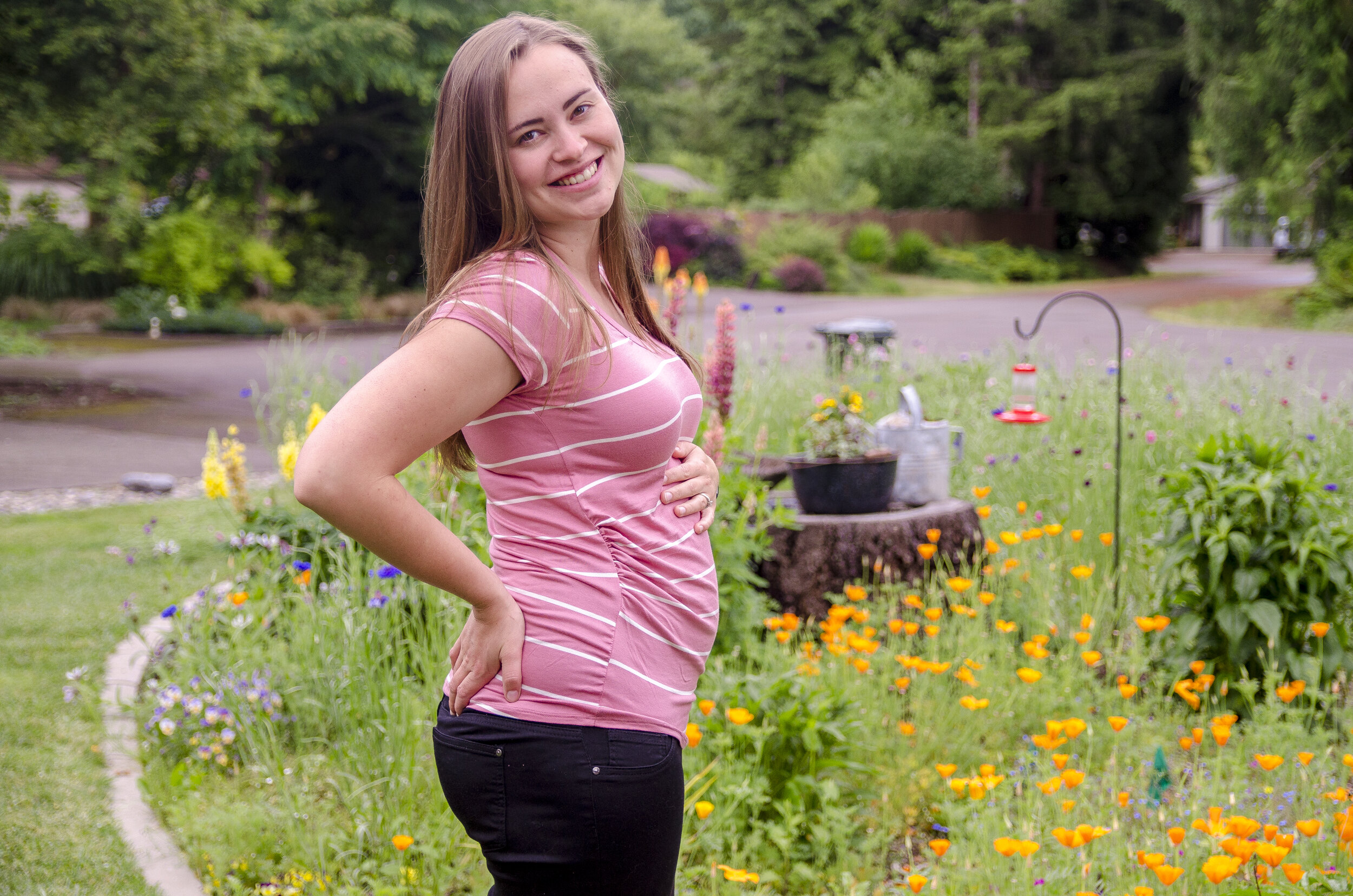
weird. That seems like the best word to describe the feeling of being pregnant. It’s weird to have a stomach sticking out in front of me and pulling on my back, and it’s weird to be unable to tighten up my abs like usual. It’s weird to feel the thuds and thunks against my insides. It’s weird when I can see them from the outside. It’s weird to get the app updates every week that tell me how big the baby is using fruit or vegetable illustrations—right now she’s as big as a head of lettuce. How in the world does a head of lettuce fit in there?

Eating

a lot of fruit. Strawberries and cherries are in season and I eat so many of them at work! I also just discovered New Zealand sungold kiwis, and I don’t know how something round and yellow and egg-like can taste exactly like the best raspberry I’ve ever had, but I love them.

Noticing

that there’s a very fine line between “Bible student” and “Bible snob.” I love talking and learning about the Bible, so I gravitate toward Facebook groups and podcasts that share my enthusiasm, but I’m often turned off by the way some scholars seem to lord their knowledge over others, or make a mockery of those who try to share in it. It seems to become a competition over who is the better Pharisee rather than a celebration of the God who invites in the little child, and it makes me sad.

Wondering

if all the “problems” I have seen in the Church are really just projections of what I see in myself. I’ve struggled with seeing the Church as more of a skeleton than a body—well-structured with truth, but lifeless, motionless, lacking in spirit and warmth. But the reality is, that’s me most of the time. As an Enneagram 5 who finds great security in attaining knowledge, it’s a very short step for me out of relationship and into religion. Pharisaism comes easily; community, vulnerability, and love are hard. I have to be vigilant to seek after knowing God intimately and experientially rather than merely knowing Him theoretically or theologically.

Playing

“O the Deep, Deep Love of Jesus” and a lovely arrangement called the “Children’s Medley” on my piano. Ever since I got far enough along in my pregnancy that I learned the baby can hear sounds outside the womb, I’ve been trying to play and sing her a few songs on a regular basis. These are my favorites.

Making

sooo much granola. I used to fast from evening until around noon the following day, but I’m back to three meals a day since becoming pregnant, and having fast and healthy things available for when hunger hits with ferocity has helped me a lot. I use coconut sugar, monkfruit, and whole oats so that I don’t feel bad about sprinkling a few chocolate chips on top! ;)

Reading

the Epistles and the very last few Psalms, because Bible180 is almost at an end! It always seems like such a long, hard challenge when I’m in the middle of it, but then I blink and it’s June and I’m almost done. It’s so good to be back in the Story again.

Creating

a baby quilt with a giant, scrappy patchwork strawberry on it. My obsession with fruit apparently extends beyond merely eating it.

Asking

if trying clothes on in a store is actually overrated? I have always felt that fitting rooms are absolutely nonnegotiable when clothes shopping, and I definitely still think so about certain stores where I don’t know my sizing, but since most fitting rooms are closed right now, I’ve been doing a lot more online ordering or grabbing off the rack to try on at home. My success rate at picking clothes I like has actually surprised me, and trying stuff on at home is SO much nicer than in a public fitting room. Thankfully most stores are back to accepting returns when something doesn’t work out, so it’s really the best of all worlds (especially now that I have to figure out the maternity clothes situation).

Watching

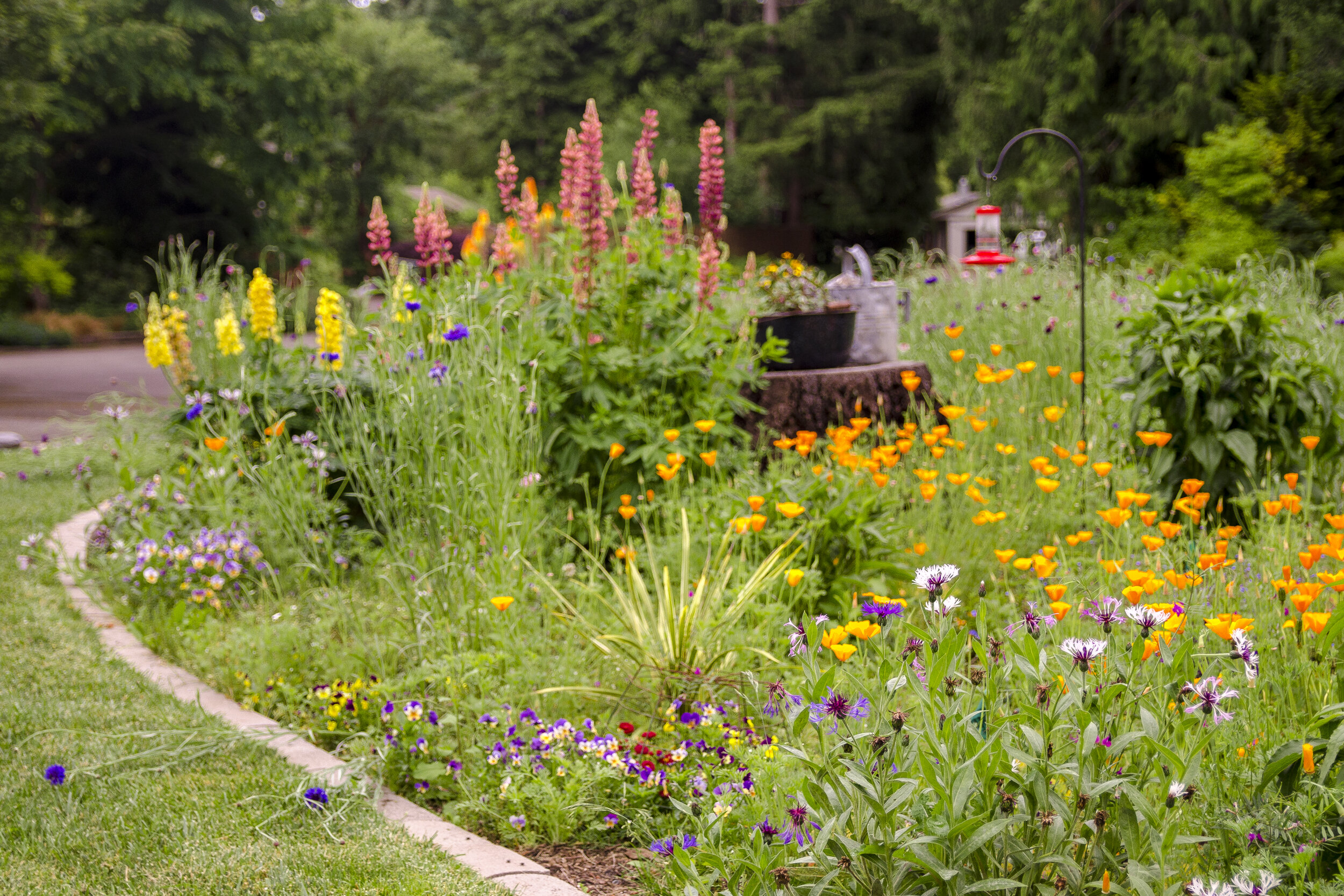
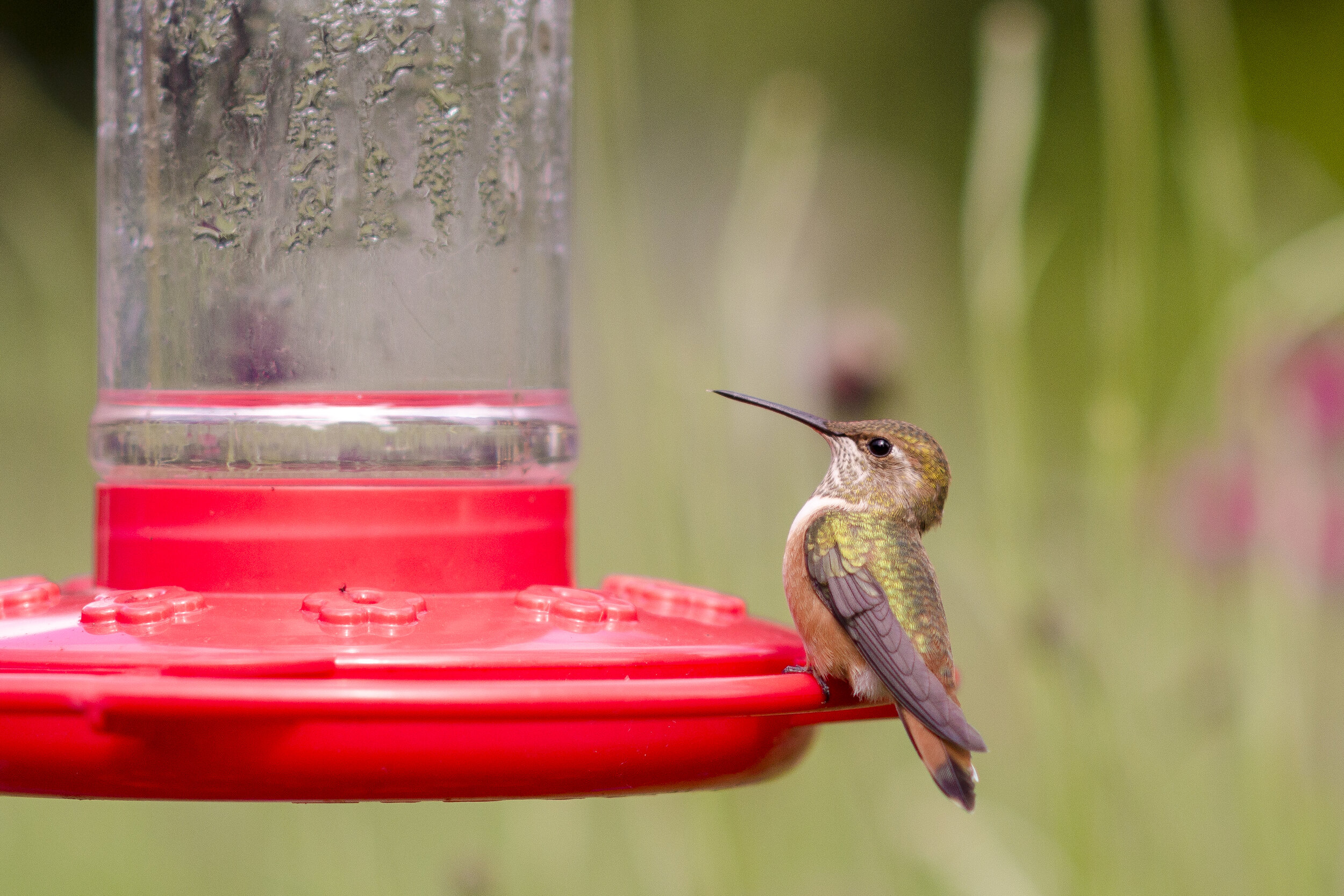
so many hummingbirds zoom through my garden. I got a bunch of fuchsia starts for fifty cents each this spring and filled up all my containers and baskets with them, and they’re finally in fully bloom. The hummingbirds love them. (Random aside—I have somehow been spelling the word “fuchsia” as “fuschia” for my entire life. Apparently that’s wrong.)

Enjoying

working my standard Thursday morning shift at Spud’s Produce. Thursdays are the best morning to work, in my opinion, because we get 2-3 grocery loads delivered on top of our usual produce load. I like how much there is to do, and that so much of it involves replenishing dwindling stock on the shelves till they are full and bursting again. I usually get to be the first to see new items come in, and every once in awhile, a misdelivered item means I get free snacks. :)

Worrying

that summer is going to go by too fast. It always does, but with how eventful this year has already been and is promising to continue to be (in good ways as well as bad) it almost feels like being trapped in a tornado that just keeps picking up speed. I want to have space to enjoy the summer, to reflect on everything we’ve been through, and to look forward to what’s to come, but it often seems like there is just not a moment to spare.

Laughing

too little? This one has had me stumped. My cats always make me laugh, and so does watching the birds in the front garden frolicking over the birdbath, but laughter has not been a main element of my life in the last few weeks. That seems sad.

Dreaming

very vividly, thanks hormones.

Doing

lots of squats and stretches for my lower back. I heard squats are good for preparing for labor, so I’ve been adding them in various forms to all my workouts and day-to-day activities. The low-back ache from losing so much core stability has me trying every stretch in the book for relief.

Listening

to an abnormally high amount of news commentary, for me. For a long time I was pretty much a news avoider, but I started on a quest to be better informed a couple years ago, with a special focus on hearing voices from the opposite “side” from myself. I suppose this plays back into my security in knowledge; I wanted to discover which perspectives truly made sense, and know why they made sense. Interestingly, this journey has brought me back to many of the same standpoints I started from, but now I feel a little more firm on why I stand where I do. I’m trying to maintain an open mind, open ears, and open heart—because it’s hard to find that anywhere in the current cultural and political climate—while holding fast to what I know is true, right, and good.

Planning

a kitchen remodel and a baby room—who thought doing both of those at the same time was a good idea, anyway?! Thankfully Sam is doing 99% of the logistics and labor the kitchen will demand, so I have at least some brain space free to think about the fact that we are adding a person to our house in September.

Fearing

what it will be like to transition from a household of two to three, to be honest. Having a child is a weird paradox: Everyone is excited and happy for you, but they’re also the very same people who have made offhand comments over the years about how hard it is to be a parent and how having kids restricts you from doing a lot of your usual activities. It’s a bit like reliving the days before I got married, when so many people stated or implied that I was too young to tie myself down, and was throwing away my life. For someone who doesn’t need a lot of help to overthink things, this can really send me into a tailspin of fear. Is this going to be okay? Can I do it? Will I still be myself, or will I turn into someone I don’t recognize? Will people still want to do things with me? Will I have support, or are Sam and I in this alone? How in the world does one take on the enormous task of raising a person from newborn to adulthood, anyway? In fact, how does the human race still exist? (I realize these questions are progressively more dramatic and absurd—but that’s what I mean by a tailspin.)

Praying

for peace, wisdom, and the presence of God. My path over the last 8-10 years has involved many twists and turns, some of them incredible blessings and some of them terrible heartbreaks, and He has been faithful. So I am trying to keep my eyes set on Him and follow His lead, one step at a time.

five experiences that have helped me understand the Bible better

Though I haven’t been in a formal Bible classroom for seven years, I will always call myself a Bible student. As a disciple of Christ, I am learning that His teaching can happen through anything and anyone, at any time, and anywhere; while I feel immensely blessed to have had the short year of intensive Bible scholarship that I did, the greater challenge at times has been to remain in that seated position at His feet no matter where I am in life. To, like Mary in Luke 10, find space to listen to His Word even as regular life goes on buzzing around me.

Reflecting on this recently, I’ve been amazed by how so many of my life experiences have lent a richness to my study of the Bible and knowledge of God that I couldn’t have gained in a classroom. God’s work is constant, and often goes unnoticed in the moment, but I’m amazed by how He has worked through some of my most mundane or seemingly-unrelated experiences to build me into the disciple He wants me to be. I wanted to share some of the experiences that I think have impacted me the most, in hopes of encouraging you to reflect on your own.

How growing up on a farm helps me study the Bible

1 / GROWING UP ON A FARM

I didn’t know, while I was living the first eighteen years of my life on a farm in eastern Washington, that God was teaching me some valuable things I’d take with me in learning how to study the Bible and understand His character—but now I can hardly imagine how different my perspective on God’s Word would be without this background. The Bible was written largely about an ancient, agricultural, hill-country people. Their lives were a struggle of survival, dependent on weather and crops and harvests and animals; in particular, they had to depend on one another, because it took each member of the family doing his or her part to keep them all alive. By comparison, my farm life was downright cushy, but I did get to taste what it is to be mutually dependent on each other, on creatures, and on the earth; I can understand fairly easily the countless agricultural metaphors the Bible uses to describe God, His work, and His wrath. Although there is still a huge chasm in understanding to overcome between my own culture and that of the ancient Biblical author, I think it would be that much wider if I had grown up on a postage stamp yard in the American suburbs instead.

How raising sheep helped me study the Bible

2 / MY YEARS RAISING SHEEP

For about a decade when we were still living at home, my sister and I raised a small flock of Suffolk-Hampshire sheep together as 4-H projects. Nothing has informed my understanding of human nature and God’s relationship with His people quite as colorfully as my experience with sheep, which are, of course, one of the most-used illustrations in the Bible—from the ancient sacrificial system to Psalm 23 to Christ Himself, the “Lamb who was Slain.” When I read the passages in Scripture that compare God’s people with sheep, I know exactly which traits inspire them: chiefly, helplessness and fear. Humans and sheep have in common a total lack of meaningful ability to control their circumstances and protect themselves, which leads to a constant baseline instinct of fear, and frequently inspires them to make very unwise choices.

This has helped me to understand that God doesn’t look on me with contempt for my sinfulness and distrust, but with compassion for it. He knows that, deep down, my lack of faith has its roots in fear, and as the Good Shepherd, He wants to rescue me from the dire consequences of the sinful choices I’ve made out of fear and call me gently into the safety of His fold. If I know anything about dealing with sheep, it’s that responding with aggression and anger to their already-precarious state of mind will inevitably cause them to scatter in panic and flee. It breaks their trust and makes me, the one who was supposed to shepherd and protect them, into a predator and a threat. Thankfully, God’s shepherding of my own fearful heart is patient and perfect.

3 / ENGLISH LITERATURE CLASS

When I was a junior in high school, I enrolled in a college-level literature class that was taught by Mrs. Kruse, locally famous for her quality teaching and standard of excellence. I read short stories and books from a range of literary greats, such as D. H. Lawrence, James Joyce, Leo Tolstoy, William Shakespeare, Jack London, Geoffrey Chaucer, and Herman Hesse—and then was expected to write analytical persuasive essays on various aspects of each work in under an hour. Far more than learning the content of a handful of famous stories, this class taught me how to think critically and quickly, how to ask the right questions, and how to search carefully for and articulate the answers. I learned how to read the invisible concepts behind the visible words on the page, how to connect ideas from one person’s story to a larger universal truth, and how to see a work as both a whole and its parts at the same time. I find I am constantly called on to use these same skills when I study the Bible, which is a literary masterpiece all its own, a highly complex work that is anchored in a far different context from my own and yet speaks to truth that remains absolute regardless of what changes in the world around it.

How going to Israel helps me understand the Bible

4 / SEEING THE HOLY LAND

Before I went to Israel the first time, others who had already been there told me how standing in the very places it all happened would bring to life my experience of the Bible. I believed them, but I couldn’t fully grasp how right they were. Seven years and two tours of Israel later, it’s hard to clearly recall what it was like to read the Bible before I could see and smell and taste and touch it in my memory. I have seen the Valley of Elah where David slew Goliath. I remember the caves above Ein Gedi where he hid from Saul. I’ve stood on the ground where Paul departed Israel for Rome, never to return, and I’ve touched the bedrock of Calvary. When I read about Jesus calming the storm, I can smell the wind over the Sea of Galilee, and when He preaches the Beatitudes I can envision the crowd on the hillside. Traveling in Israel made the Bible more than words and stories and characters—it is familiar and colorful and alive.

How marriage helps me study the Bible

5 / MARRIAGE

I knew, in theory, all about the “mystery” of marriage as a reflection of Christ and the Church long before I ever got married. Actually being married, however, has pretty much exploded everything I “knew” in theory—in hard but necessary ways. Nothing else has shown me so clearly how insidiously sin has distorted all of God’s good gifts. Woven into my entire understanding of Ephesians 5 was a fallen worldview straight from the curse of Genesis 3, tainting God’s beautiful picture of selfless love and submission working together to bring Him glory with ugly hidden undercurrents of oppression, self-protection, and distrust. But as my husband and I both do the work to unlearn these patterns, I am rediscovering the beauty in God’s original design for humanity in Genesis 1 and 2. He created incredible goodness, and He is in the midst of an incredible redemption plan for all that goodness—which He has invited you and me to be part of, married or not! The story of the Bible isn’t just something to read and study, it’s also something we have active roles in as God’s children, looking ahead to when all that has been defiled by sin is made new and glorious.

Marriage has also given me a special appreciation for the relentlessness of God’s love for His people, even and especially when they have repeatedly failed or betrayed Him. I’ve lived the reality of being failed by and then forgiving the very person who vowed his commitment to me; I have also been the one to fail him and be forgiven. Through it all, the marriage covenant stands firm, a stalwart reminder that so, too, does God’s covenant love for us—regardless of how poorly we treat Him sometimes.

How having a baby helps me understand the Bible

BONUS / HAVING A BABY (TBD)

So, I have not actually had a baby yet, but I have spent the last 5+ months carrying one, so I am currently very aware of all the birth and parent-child language God uses in the Bible! Stay tuned—I have a feeling this one is going to rock my world. (Baby girl is expected September 2020!)


Your turn—what are some of the unexpected or everyday things you’ve experienced that God might be using (or want to use) to help you know Him more? Your list will likely look a lot different from mine, but at the same time, it’s probably exactly the list He knows you need. God is teaching us constantly if we have the heart to learn, whether we ever step into a Bible classroom or not.

Five surprising things that help me understand and study the Bible

God is not afraid

I’ve learned a lot about life and people throughout the current pandemic, as I’m sure most of us have. But the one big thing that I keep noticing again and again is that fear invariably outworks itself in the form of control.

I’ve observed this in my own life before: the need to force all my unruly ducks into a row somehow because of my anxiety about some issue, or life in general. Over-exercising, under-eating, or rabidly purging belongings out of my house are some of the ways it shows—all of them poorly disguised attempts to control something.

I’m seeing it in just about all of us now.

In fear, some of us try to control the narrative we take in about the virus: we will only hear the parts that serve our desired and carefully curated point of view, and find ourselves “experts” or news articles to silence the rest.

In fear, some of us try to control the behavior of those around us: we will mock and shame people who are making different choices about social distancing than ourselves, or those who feel differently about the measures taken by our governing authorities.

In fear, some of us try to control our minute-by-minute experience of the extra time we have at home: we will keep to a rigorous schedule, strive after endless self-improvement, and attempt to force Covid-19 to serve our purposes.

All of these are understandable to me. It’s comforting to feel like we have the upper hand on our unseen threat. It’s comforting when other people’s choices align with our own. It’s comforting when the “experts” agree with us. In these we find a sense of security—albeit an artificial one.

And something else has become more understandable to me: The question, “Why would God let ____?”

I’m no stranger to this question; I’ve asked it plenty of times myself—but I have struggled to understand why it’s the question that so often stands between people and God. Those who reject God often seem to use some form of this question and its unsatisfactory answers as their justification for doing so. And it makes sense now.

God is not afraid of coronavirus.png

Because if we were God, we would control everything we possibly could. Our basic state as human beings involves some level of fear. This, I believe, is the reason the Bible so often refers to us as sheep: not because we are fundamentally idiots, but because we are fundamentally terrified, knowing full well our own helplessness, and it leads us to make some fundamentally idiotic choices. So if we were God, we would have stomped down Satan before he even had a thought to rebel. We would have created compliant robots who would never dream of eating the forbidden fruit. We would have set ourselves up as the tyrannical dictators of an unthinking population—it is the only way we could avoid feeling threatened.

But God is not afraid.

God is not afraid, therefore God doesn’t have the same innate need to control that you and I do. He is not like us. In His basic state, He is utterly sufficient by Himself; the angelic legions could abandon Him and the entire world could reject Him and He is still enough. He is relational, yes, but He is also Three in One, so even His relational nature can be satisfied without us. He did not create anything because He needed a power trip—He created it all because He wanted to, and He has given His Creation the gift of choosing what they want, too.

Why would God let only some people be saved? Because only some people choose Him, and He is okay with that. God is not afraid.

Why would God let something bad happen to someone good? Because we don’t all live in robotic bubbles, unaffected by the hurtful choices of those around us or before us, and He is okay with that. God is not afraid.

Why would God let evil exist in the first place? Because He invites us to know Him for who He is—and an important part of His character is His omnipotence. His power isn’t threatened by any opposing force, even one that costs Him dearly. God is not afraid.

And would we want Him any other way? When we acknowledge our own powerlessness, it becomes all the more soothing to know that we have a God who is both utterly powerful and utterly fearless. He doesn’t need to squelch every little threat with overbearing pseudo-control because He has real power, and He is entirely unthreatened.

All of our little controlling behaviors in light of the current world are normal and understandable. But they’re also unnecessary and can become destructive. If our God is unafraid, what have we to fear? What threat does a different viewpoint or a flexible schedule or even a novel virus hold? Our treasure is not in the opinions of others or in the achievements of this world or in life itself—it’s in Him. And He’s not afraid.


Want to learn more about who God is?

The best place to go is to the Word. The Bible is the story of who God is, and who God is changes everything for you and me.

To that end, I have a couple resources that may help you get started in your journey through the Bible:

  • The Bible180 Challenge is an opportunity to read through the Bible in 180 days, according to a thorough chronological schedule. You get a day of rest each week as well as an email offering accountability, support, and the very best study resources I’ve found to help you understand what you read. You can also use the Bible180 Challenge Journal to help you focus, stay on track, and build good study habits!

  • Bedrock: A Foundation for Independent Biblical Study is a comprehensive textbook/workbook that will teach you how to dig DEEP into each of the seven types of Biblical literature. It’s a great next step for anyone who feels ready to surpass the typical milk of sermons and Bible studies, and desires to learn how to serve themselves on the meat. Find it on Amazon.