approaching God who approaches us

The Advent of the Christ was just a purple candle on a Sunday morning for the first 30 years of my life, and I’m still learning to pause and hold the tension of joy-with-penitence of this “little Lent” before rushing straight into tinsel and carols and holly-jolly cheer the day after Thanksgiving. What is joy with penitence? What does it mean to fast in preparation for a feast, or to sorrowfully reflect while at the same time growing in anticipation for the arrival of the King?

The calendar moves us toward Jesus, toward Christmas. Jesus moves toward us in the miracle of the Incarnation. Heaven and earth are set on a collision-course that will blow up the trajectory of history and should likewise alter the course of our lives. The King is coming, and we are ill-prepared, sin-filled, unworthy to welcome him—sorrow. The King is coming, and He is our loving Father and our salvation—joy.

Advent is like the cool of the day in Eden, that time of the evening breeze when God walked in the garden (Genesis 3:8). His approach would have been pure joy, but for the failures of His imagers. Adam and Eve hide like guilty children waiting to be caught by their parent, unsure what the reaction will be, but expecting it to be bad. Instead of joy, sorrow. Within three pages the whole-goodness of God’s presence for humans has been corrupted by sin, and the whole-joy of His approach has been corrupted by fear.

“Where are you?” (Genesis 3:9b)

“I heard you in the garden, and I was afraid because I was naked; so I hid.” (Genesis 3:10)

I was afraid because I was naked. I was ashamed of myself. I was not worthy to receive you.

We’ve all been there. We reflect for two minutes on the scandal of the Incarnation and we are there: naked, ashamed, unworthy, afraid. How can we approach this God? The instinct is to hide, to lie, to cover ourselves up.

But this glimpse of Advent in Genesis is a glimpse of the joy in our own little Lent, for the King does not laugh at His wayward children; He does not lose His temper; He does not destroy them or abuse them or beat them down. He holds His boundary—and at the same time He covers their shame.

The Lord God made garments of skin for Adam and his wife and clothed them. And the Lord God said, “The man has now become like one of us, knowing good and evil. He must not be allowed to reach out his hand and take also from the tree of life and eat, and live forever.” So the Lord God banished him from the Garden of Eden to work the ground from which he had been taken.

Genesis 3:21-23

We pause in Advent deeply aware of our spiritual nakedness and deeply grateful for God’s generous provision. We can approach Him, unhiding, because He approached us not as a mighty warrior-king but naked and humble Himself, a suffering Servant offering us robes of righteousness. We have a place now in His temple court because He became the fruit of the tree of life by hanging, cursed, on a tree of death.

Of Him we take and eat, and live forever.
spring will come again

The garden is drifting to sleep.

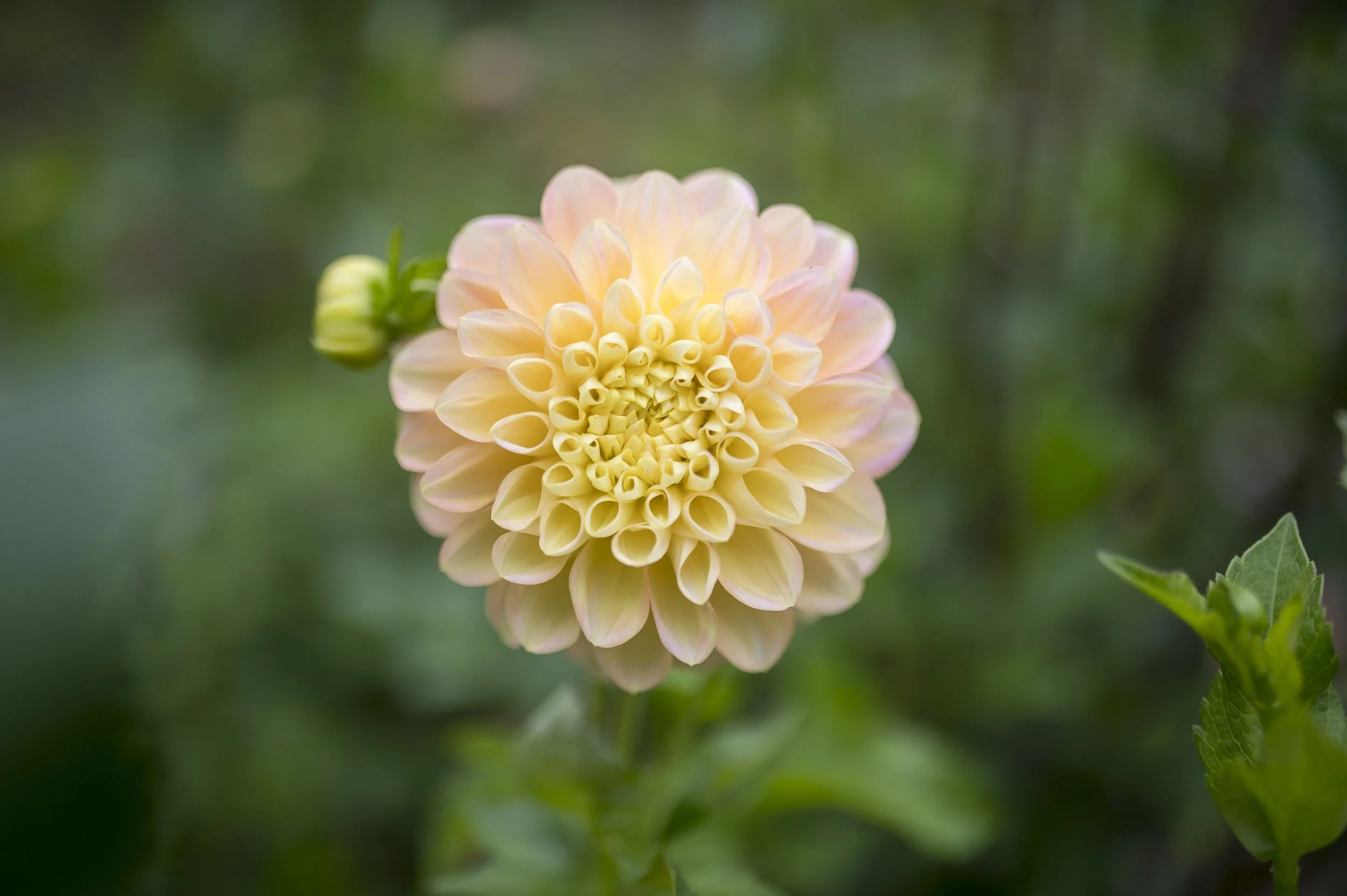
Sheets of cold dew and coverlets of mist wrap around the still-green foliage. Patches of yellowing and mildew form like age spots on the leaves, reminders of a life-cycle coming to its end, and despite their weakening stems and the disappearing daylight the dahlias keep thrusting forth buds. It is a silent form of “rage against the dying of the light,” but a rage all the same—a refusal to go submissively to winter’s sleep.

First frost looms in the shadows like the Angel of Death. His cold touch will instantly and irrevocably turn the green of life to the black of mourning.

But even the Angel of Death can only kill the body. The soul—the nephesh, the life-conduit—is cradled safely in the hidden place, waiting for resurrection. The roots and seeds lay at peace in the earth, waiting for spring.

We might think of death-and-resurrection as a pattern started by Jesus, but it has been with us since God first divided light from darkness and set the times and seasons into motion. Day gives way to night and then dawns again. A full moon wanes until it disappears in shadow, and then waxes again. Growing-time becomes harvest-time becomes dormant-time before everything wakes up to grow anew.

The ceaseless liturgy of the created order mirrors the life, death, and life-again cycle—a cycle that first-fruits in Jesus, yes, but is sketched and hinted from Genesis 2, when the First Adam falls into a “deep sleep” to be awakened into a new Adam-and-Eve humanity, and is brought to fullness in Revelation 21 when the Last Eve—the Church, including all the saints and martyrs who have died from her inception—descends from heaven as the glorified Bride, the New Jerusalem.

In that day, death will be such a forgotten enemy from our long-ago past that we’ll no longer need reminders in the form of daily, monthly, or yearly “little deaths.” There will be no night there, no daily sleep of unconsciousness to remind us that our bodies will soon enough sleep with our fathers. We will have no need of sun or moon, for God’s light will shine perpetually, everlasting as our lives. The tree of life will yield its fruit every month; there is no winter, no season of dormancy, no Angel of Death to bring frost, only a better-than-Eden flourishing that is both endlessly productive and endlessly restful, somehow.

This is the hope I find in the garden drifting to sleep: not that I relish in small deaths, not that I won’t profoundly miss my flowers, but that for now it’s an irrefutable reminder that God is trustworthy and faithful. As I have no doubt that the sun will rise after tonight’s small death of night, or that the spring will come after this year’s small death of winter, or that the plants destroyed by frost will grow again next spring, I need have no doubt that my own mortal body is safe in the hands of the One who wove death-and-resurrection into every thread of Creation.

Paul wrote that “The last enemy to be destroyed is death” (1 Corinthians 15:26), but the destruction of death is one of the very first things written into the ordering of the universe. It has not yet come, but it is coming. From even before death was a threat to the Garden-dwellers its destiny was defeat.

There is a beautiful service on All Souls’ Day at my church in which we commend those who have died into the hands of God. We take down a list so we can commend each by name. I love this practice of opening our hearts to give our departed loved ones into the divine care of God, trusting that He—the first Gardener—knows how to tend them safely through the winter. Following the pattern of all Creation since before time began, spring will come again, and soon—when the last enemy is destroyed under Christ’s feet—we’ll get to worship Him together, in everlasting summer.


So will it be with the resurrection of the dead: What is sown is perishable; it is raised imperishable. It is sown in dishonor; it is raised in glory. It is sown in weakness; it is raised in power.

1 Corinthians 15:42-43


Alleluia!

Genesis 2 (a poetic vision)

She awakes
looking into a mirror.
Strength, goodness, and valor are there.
His first, and have become hers—
two halves of a split picture, the Imago Dei.

The One who breaks apart darkness and light,
water and ground,
God’s space and human’s space is now become
the One who knits together whole new beings from inside Himself.

And he who breaks apart the creatures by kind,
who himself is broken in two,
incomplete,
not good,
cannot be knit whole outside of her.