these are the days: november

I took this picture on one of the last days of October. The leaves were past peak, but still hanging on; now that November is in full swing, nearly all the trees are bare. The changing of the clocks seems to have sounded the knell of winter’s arrival, despite several more weeks of fall ahead. Suddenly there are only six weeks left of the year 2019, and an entirely new decade is around the bend.

It’s in the midst of all this constant moving and changing that the days have turned, for me, into the days of learning how to stop.

Did you know that the word “Sabbath” (or “Shabbat”) comes from the verb in Hebrew that means “to stop”? It’s not quite the same as the verb “to rest,” the way it normally appears in our Bibles. God didn’t “rest” from His labors so much as He “stopped.” Sabbath is an invitation to stop. To cease. To quit trying to carve out our own survival and success for a pause to remember that the real source of survival and success is Someone else.

Between my regular job, my writing, and various other projects, I got caught trying to avoid Shabbat for a bit too long and spent a few days sick in bed because of it. Even during my fifteen minute breaks at work, I’ve had a bad habit of keeping my brain busy by checking my email or listening to a podcast. It can be so hard to submit to a full stop - to release the need to find my value in my productivity and performance for even a few minutes a day and just be still.

So these are the days of learning how to stop. To sit and look out the window when I have five spare minutes before I need to leave for work. To sew quilt binding in silence when I’d normally want music or a podcast or a TV show to fill that space in my brain. To follow God’s example and not only rest, but fully cease, as an acknowledgement that the work I’ve done is good and that the Provider is even better.

Suggested Thinking

how to study the Bible: discover the story


In the history of this blog, three of the top five most-read posts have been related to the topic of knowing and studying God’s Word. I love nothing more than hearing someone say, “I’d love to know how to study the Bible for myself” - or, “I’ve been going to church and Bible studies for years but I’m just so hungry for MORE.”

The study of the Bible isn’t just for pastors and elders. God’s Word is not solely accessible to those who spend a decade in seminary learning ancient languages. I’m thankful for the people in my life who showed me that I, too, could learn how to study it for myself - because I was (and still am) hungry.

If you are hungry, too, this series is for you.


How to study the Bible

Step One: Read it.

I know, that’s not what you wanted me to say.

If someone said this to me seven or eight years ago, I would have responded, “That’s the point. I’m reading it, but I’m not getting it. There has to be more.”

How to study the Bible by reading it like a story

Hear me out: You cannot learn how to study an ancient book such as the Bible if you have not read it. I’m sure you have read pieces of it - some of them probably dozens of times over. Perhaps you started a Bible in a Year plan, but petered out right around Deuteronomy (no shame, we’ve all done it). You may have even read through the entire Bible - but it took you a whole year or more, and by the time you got to that last chapter of Revelation, you couldn’t really remember the first part of the story anymore.

The single best thing I have ever done to enrich my study of the Bible (second only to actually going to Bible school) has been to make a practice of reading the text in large, chronological chunks.

There are a few reasons for this.

  1. The Bible is a story.

    By far, the most debilitating lie I once believed about the Bible was that it was a book about how to make God happy. It’s not a difficult lie to land on when you spent your childhood in Sunday school lessons that turn all the stories of the Bible into moralized fairy tales. I thought that the Bible stories were there so we could learn from how the characters did or didn’t make God happy, and that the rest of it was explicit instruction about pleasing God.

    Reading the Bible as a single, unified story - not a collection of writings about how to be good - has relieved the incredible frustration I used to feel as I tried to wrestle extremely complex, often culture-bound stories and commands into nuggets of present-day moral application to my life. Instead, I can simply enjoy the process of following a timeless and cosmic story arc from beginning to end.

  2. The foremost purpose of the Bible is to tell the story of who God is and what He has done.

    When I started approaching the Bible as a story, and especially as the story of who God is, it finally began to take life for me. It was no longer a book of dead men’s names or a cryptic code to making God happy; each smaller storyline, each verse of poetry took on a new role in pointing back to the larger narrative at hand. I began to see God as not only the author, but the main character and the hero as well.

    Reading the Bible as the story of who God is has prevented me from inserting myself into stories which were not written about me, or into instructions which were not written to me. Instead, I can receive the Bible as a gift that God has preserved for me, and an invitation to live by His wisdom and enjoy the blessings of His presence.

  3. The Bible is an immense book which needs to be taken in on an immense scale.

    There is a time and place for digging deep into just a few verses at once, but that time and place does not come until well after we’ve come to appreciate the full scope of the text. Huge portions of the Bible are written as narratives or histories, which require a sweeping view to be rightly understood. When I stopped reading only one chapter at a time, I could see how the storylines and thoughts progress from one chapter to the next, and notice the connections that tie all sixty-six books together. Nothing in the Bible exists in isolation from the rest of the Bible.

    Reading the Bible on a much larger scale has kept me from cherry-picking verses to support the various beliefs I already held, or from reading God’s words through the extremely narrow lens of my own background. Instead, I can come to the Bible in humility, expecting it to change and challenge my preconceived ideas, emotions, and motivations with the unchanging Truth.

This first step of Biblical study is, for many people, the hardest. It takes the most time, by far. And it’s not something that you can necessarily do once and call it good - my study of the Word is the richest when I am reading through it, front to back, on an annual basis.

But I don’t love Bible in a Year plans. The goal of this step is to read in LARGE chunks, and the suggested daily readings across 365 days are usually only a handful of chapters. In addition, 365 days is a long time to retain what you read in January and still be making relevant connections between Genesis and Revelation when you get to the end of December.

The Bible180 Challenge

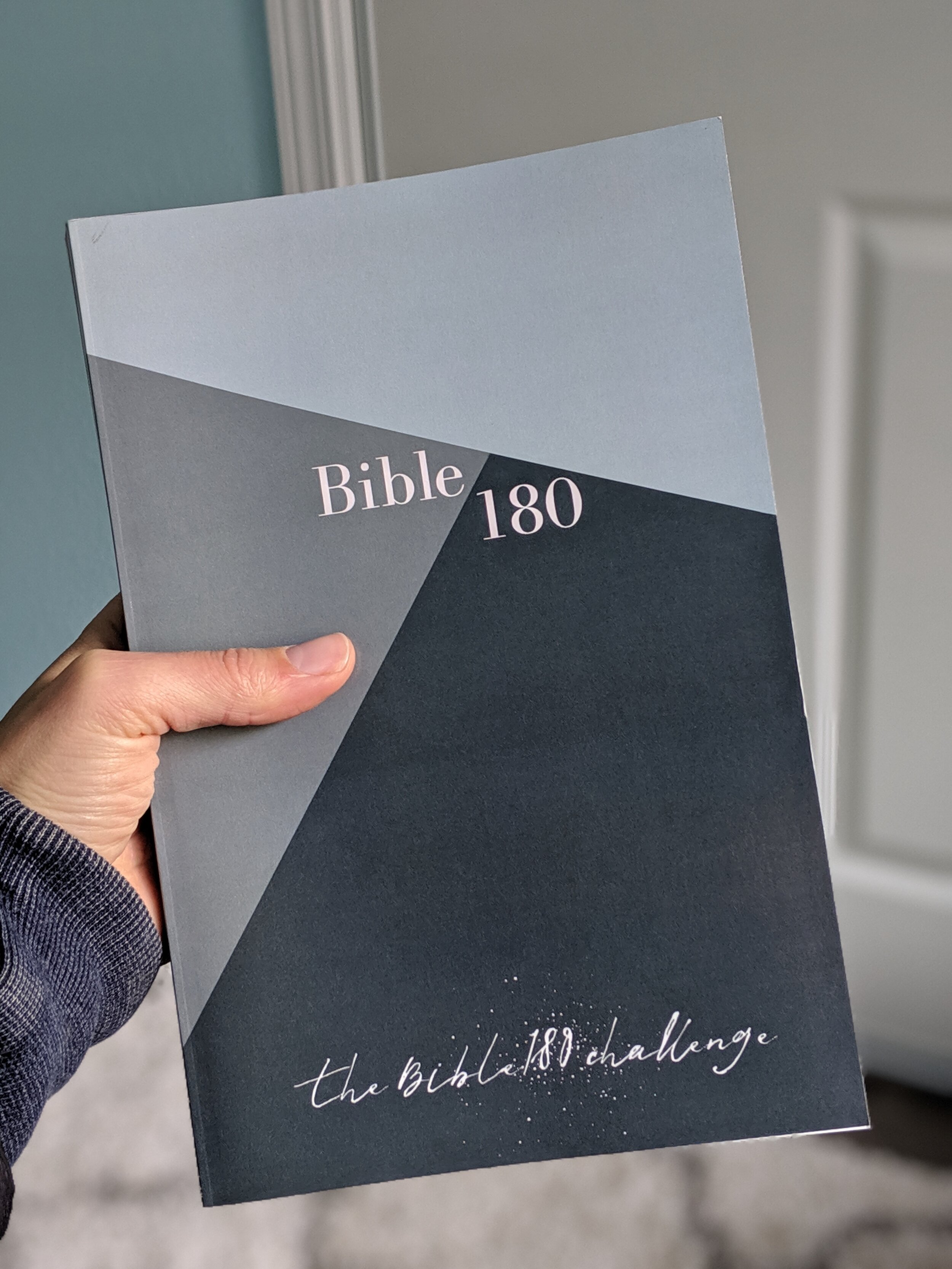
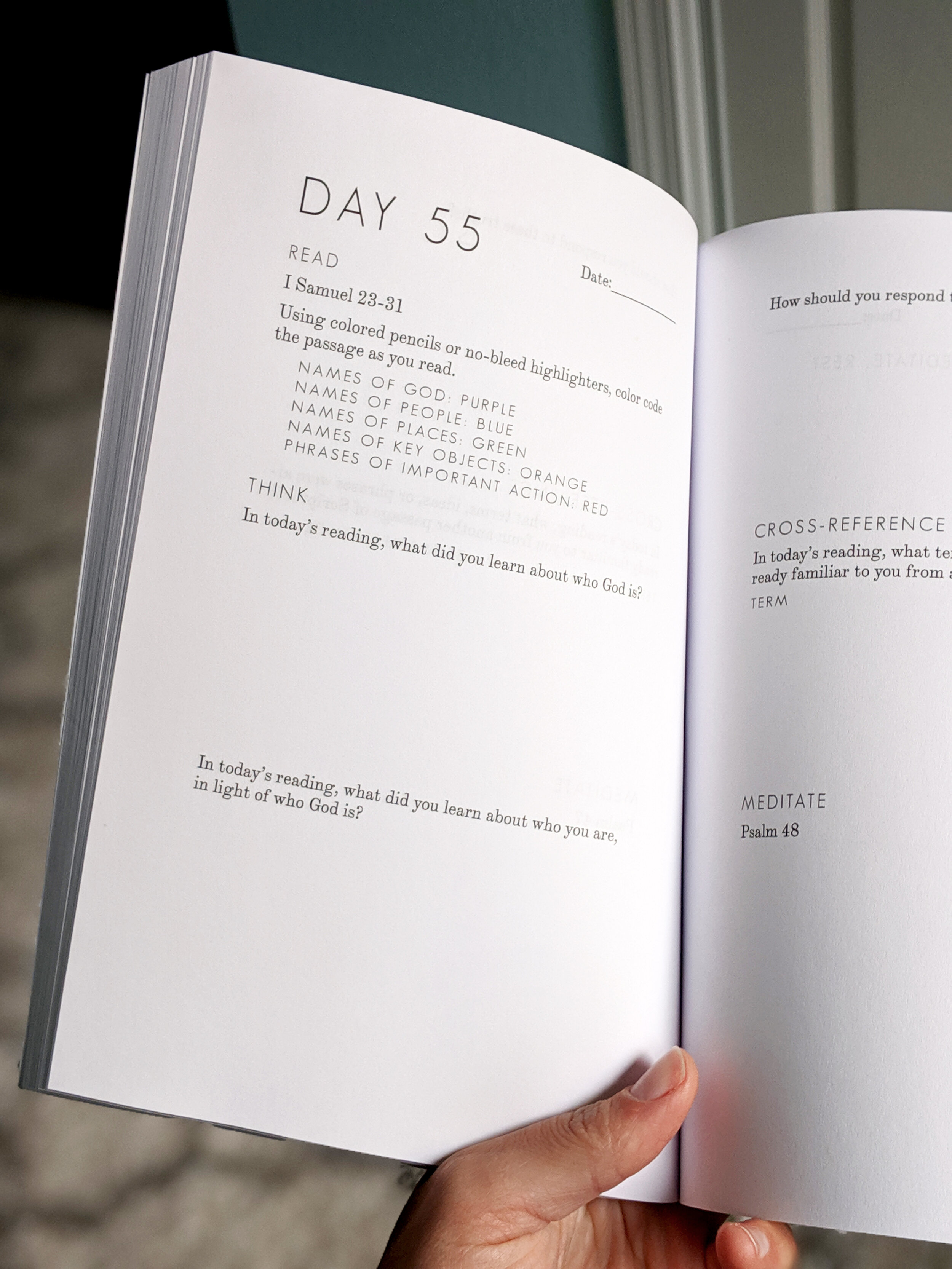
I created something called The Bible180 Challenge for this reason. It’s a challenge to read through the Bible in six months instead of twelve - with readings that vary from three to 15 chapters at a time, depending on book and genre - for the purpose of getting a sweeping bird’s-eye perspective on God’s story. It’s the best way I can recommend to kick-start a deeper independent study of God’s Word. I’ve done it several times now, and each time is a great refresher on this vast story, and shows me new facets of God’s heart.

What I love the most about running this challenge annually is hearing the testimonies of hungry people getting filled.

If you could use some help and accountability to complete this Step One of a healthy personal Bible study, I’d encourage you to sign up. It’s totally free, and just by entering your email address, you can get the full reading plan, a downloadable progress tracker, and a weekly email to keep you on track for the full 180 days. The challenge officially kicks off on January 1st, so enter your email address below to get on the list!

And, if you need an extra boost (or want to be an overachiever), I’ve created a brand-new tool for the 2020 challenge that will help you not only knock out Step One, but the upcoming steps in this How to Study the Bible series as well. It’s the Bible180 Challenge Journal - designed exclusively to make this challenge easier and even more rewarding for you. You absolutely DO NOT need to buy this journal, or any other special tool, to reap the rewards of reading your Bible in 180 days, but many of you have expressed a desire for a more analog and self-paced Bible180 experience. If keeping up with weekly emails and Facebook groups isn’t your thing, I created this for you.

Whether or not you decide to take the leap and join us for Bible180 this coming year, the fact remains: Nothing can enrich your study of the Bible like simply knowing it and reading it for what it is. The Bible is the story of WHO GOD IS. And who God is has the power to change everything for you and me.

For Step Two, click HERE!

John Crist, Jesus Christ, and me, too

Tuesday morning I got an email I’d been waiting for: the pre-sale code to buy tickets for John Crist’s upcoming comedy tour in which he was finally spending a few days in the Pacific Northwest. Between my family and my in-laws, seven of us had plans to see him live. Within a few clicks I’d secured our tickets.

The next evening I got a completely unexpected email: “In an effort to focus on his health, John Crist has made the decision to postpone his 2020 tour dates.”

A quick Google search painted the rest of the picture for me.

I am heartbroken.

Heartbroken to hear of yet more women who were treated like playthings instead of people. Heartbroken to hear of yet another well-known Christian desecrating the name of Christ. Heartbroken to know that the world has more ammunition to hurl at the “hypocrites” that claim to follow Jesus, and heartbroken to know that so many Christians are simply feeding that ammunition into their hands by openly shaming a sinner while preaching grace.

If there’s one thing I know about the Church (and perhaps this could be broadened to Western culture on the whole) right now, it’s that there are acceptable sins and unacceptable sins. There are the sinners we shun and there are the sinners we seek. There are testimonies we don’t want to hear and salvation stories we’d rather silence because their content teeters toward what we consider “not okay.” Leave your sinful addictions out of it, please, until you’re completely cured - we don’t want to hear about how God is transforming you right now, it’s the finished product we care about!

But any of us who are being self-aware on this walk with Jesus know that there are no finished products this side of the Kingdom of Heaven. There are only ugly, clumsy, moment-by-moment transformations that happen with three steps forward and two steps back.

I am grieved over John Crist’s sin. But I am hopeful for the opportunity the Church has, right now, to paint a portrait of Jesus with her response. We have a choice at this crossroads: We can respond in bitter unforgiveness and total abandonment of this man and drive deep-seated shame even deeper into the watching men and women whose sins also fall under the category of “not okay,” or we can respond with the same love and grace we ourselves have received from Jesus through no merit of our own, and watch opportunities for true healing arise.

I know that we fear being seen as licentious, permissive, or dismissive of the evils that have been committed. I feel very deeply the responsibility to honor God’s holiness by taking sin seriously. But taking sin seriously does not have to mean shaming someone for what they’ve done. It is not shame that transforms people - it is forgiveness. Shame may, for a short time, inspire them to try harder to fight their sin, but Jesus didn’t come and die so that we could try harder; He came to utterly annihilate the power of sin and death on our behalf with the power of grace. There is now, therefore, NO CONDEMNATION for those who are in Christ Jesus.

John Crist Jesus Christ and Me  Too - No Condemnation.PNG

One day, Jesus was dining in the home of a Pharisee named Simon - an upright and God-fearing man - when a disreputable woman came in off the streets of the city. She wasn’t invited - she wasn’t the kind of person this Pharisee would ever have wanted in his home, lest she defile his pure standing before God and render him ineligible to participate in Temple worship. But she had heard Jesus was there, and she wanted the opportunity to bless Him with a gift.

Simon could only look on in horror while this disgusting sinner defiled Jesus with her touch, her tears, her hair. The heavy scent of the perfume she used to anoint His feet couldn’t mask the odor of her sinfulness. This Man could hardly be a prophet, the Pharisee mused, or He would know this woman was a sinner.

Jesus answered Simon’s smug thought with a question: “A moneylender had two debtors: one owed five hundred denarii, and the other fifty. When they were unable to repay, he graciously forgave them both. So which of them will love him more?”

Simon answered, “I suppose the one whom he forgave more.”

[Jesus] said to him, “You have judged correctly.” Turning toward the woman, He said to Simon, “Do you see this woman? I entered your house; you gave Me no water for My feet, but she has wet My feet with her tears and wiped them with her hair. You gave me no kiss; but she, since the time I came in, has not ceased to kiss My feet. You did not anoint My head with oil, but she anointed My feet with perfume. For this reason I say to you, her sins, which are many, have been forgiven, for she loved much; but he who is forgiven little, the same loves little.” Then he said to her, “Your sins have been forgiven.” Those who were reclining at the table with Him began to say to themselves, “Who is this man who even forgives sins?” And He said to the woman, “Your faith has saved you; go in peace.”

Luke 7:43b-50

The woman in this story was unacceptable. Her many sins were on the list of “not okay” - they were the kind that made people not even want to associate with her, lest she taint them in the eyes of others or the standing of God. And yet it was not being shamed and avoided by the religious that transformed her; it was being loved and forgiven by Jesus. He responded to the holy aloofness of Simon the Pharisee with the rebuttal: “NO CONDEMNATION.”

No one took sin as seriously as Jesus: it cost Him everything. And yet no one consistently refused to shame sinners the way Jesus did, either.

When a shamed and sinful woman is offered the redemptive power of a gracious love, she transforms into a beautiful vessel of that gracious love toward others. And we have the opportunity to see this same transformation in the lives around us if only we will respond to brokenness like Jesus does.

If any of you are heartbroken by the news about John Crist, as I am, I beg you to consider a few things as you respond:

  • Shame drives sin deeper into secret. When we publicly shame John Crist’s conduct, we do not solve the evil or prevent anyone else from struggling with the same sins - we simply communicate that if they ever dare to be honest, we will condemn and disown them. Their sins, instead of coming into the healing light of community and forgiveness, sink deeper into the dark where they can fester and grow. Do we want to see our brothers and sisters and selves transformed and made whole, or are we more comfortable sitting here in whitewashed tombs full of rot and death, as long as the outside looks nice?

  • How you respond to this distant celebrity figure is training wheels for your response when the sinner is someone close to you. And one day, no matter how well-cushioned your Christian bubble, it WILL BE someone close to you. It’s very easy to drop a fallen celebrity like a hot potato and think nothing of it, but what about when it’s your child? Your sibling? Your spouse? Every person in your life is a sinner with ugly stuff in their past and present. Grace is something to start practicing NOW.

  • Every testimony is a testimony-in-progress. Yours. Mine. John Crist’s. When we leap over one hurdle, another is only a few strides away. This race is life-long, and if we’re waiting for the finish line to celebrate God’s work, we’ll miss out on it completely! God is working NOW, in me, in you, and in John Crist. Testimonies don’t have to be wrapped up in bows with a “happily ever after” to be testimonies - and in fact, God’s magnificence usually shines brightest when we are at our smallest. If we are faithless, He remains faithful. That is a testimony.

  • Remember what kind of characters make up the pages of your Bible. You need not think hard to find examples of many believers and instruments of God who had heinous sins on their record. We may be quick to throw John Crist under the bus and yet somehow manage to see men like Abraham (who sold his wife twice to save his own skin and raped his maid) and David (who abused his power in order to commit adultery with Bathsheba and then had her husband murdered to make himself look better) as heroes of the faith. The point is that no one is righteous. Were these crimes despicable? Yes. Were these men loved by God? Also yes. The same paradox is true for all of us, and this is the heart and soul of the Good News! We come with no goodness to recommend us and yet He loves us anyway, even to death.

None of this is to minimize or dismiss the pain that John Crist’s actions have inflicted. The human beings his sin has harmed matter deeply, and they too need to be received with love and care. Unfortunately, the harm done to these specific women is but one piece of what has been revealed to be a deep and far-reaching cultural wound. It touches all of us in some way, and so we cry out for God’s comfort and abundant grace.

Are you a woman who has been objectified, belittled, or used? Me, too.

Are you a person who has been disillusioned with religion because of the rampant hypocrisy you see? Me, too.

Are you a sinner who fears that not a soul would be left by your side if they “really knew”? Me, too.

Are you a Christian who has been let down by a person of faith you looked up to? Me, too.

Are you a broken human taking three steps forward and two steps back every day on a testimony-in-progress that sometimes seems like purposeless wilderness wanderings? Me, too.

Are you left with no one to hope in but Jesus, the One who already bought your victory and has declared NO CONDEMNATION over you? Me, too.