at 31

I asked Sam the other day who the “child” was who was rolling hose at the fire station. Apparently that child was 23 and has already gone through medic school—older than I was when Sam got hired. Did I look that young, once?

I spend a fair amount of my time with people older than myself, but none of them has mentioned the weirdness of being a business owner in a networking group run by fellow 1990s-born peers, of taking your kids to a pediatrician younger than yourself, of realizing your husband is now the senior person on his shift when just the other day you were the newlyweds and newly-hireds meeting the veteran lieutenant for the first time.

And then Charlie Kirk was murdered.

Thirty-one years old.

Parent of two.

This is life now in the middle place, not young, not yet old: watching faces fade out of family photographs one by one, watching your baby morph into a toddler and then into a kid, every day feeling like you’re meeting someone new and losing someone old. Childish romanticization of young death gives way to a desperate prayer that God will have mercy on your family for another day, that the inevitable shattering loss will stay its hand for just one more hour of the present tranquility.

Time pulls like a riptide, and perhaps the lesson is that the harder you resist, the more likely you drown. Breathe. Don’t try to swim to shore. The waves will always win.

He was 31. So am I.

He was a parent of two. So am I.

He was mortal, fragile, always just one breath away from God taking His breath back. So am I.

At 31, a Levite man might have been a priest for a year. At 31, Jesus was one-third of the way through His ministry and two years away from death. At 31, my husband had already been bereaved of his mother; at 31, my mom became pregnant with me; at 31, my cousin Megan had just one year left to live.

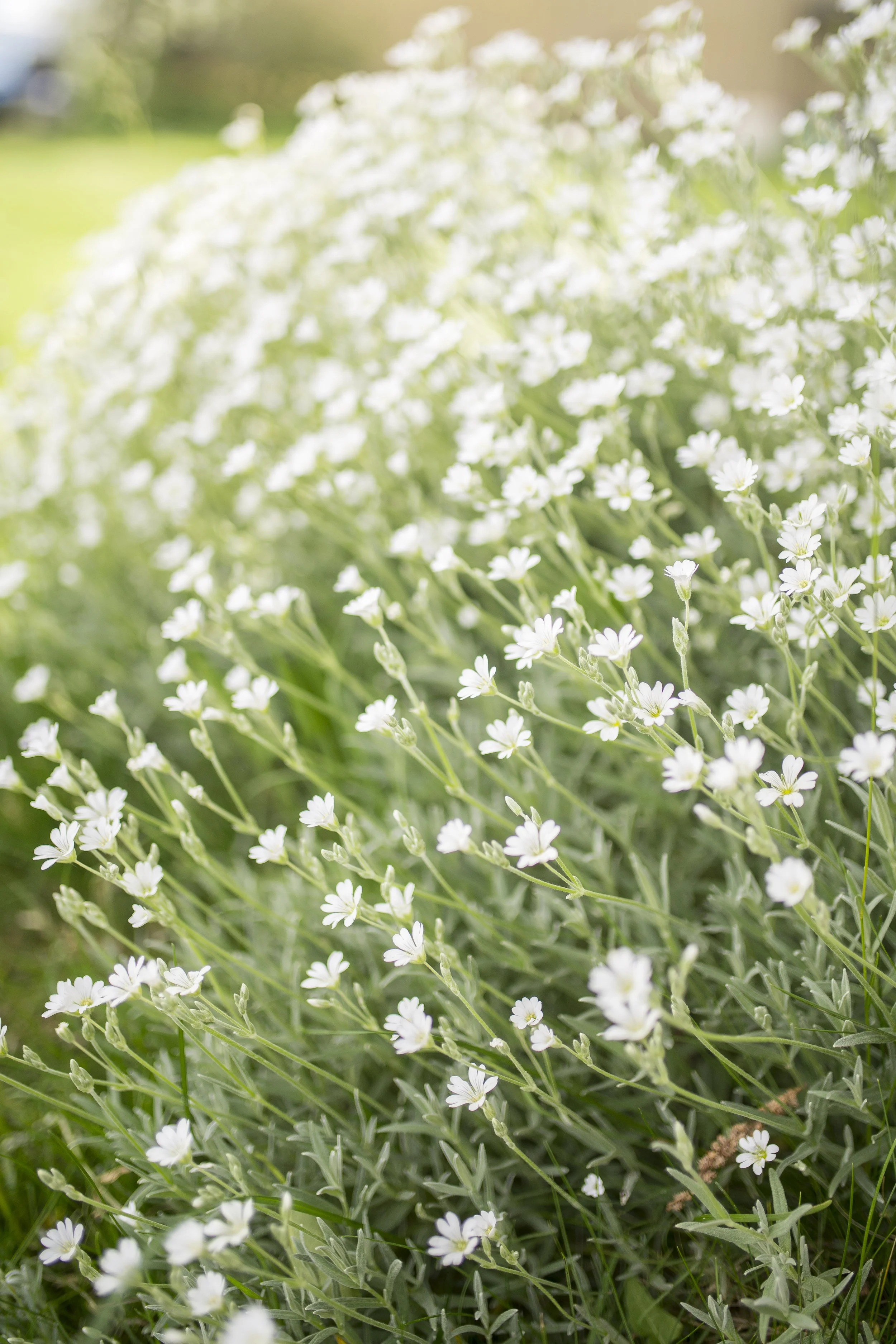
In this state we live and endure, somewhere between certain death and eternal life, between paralyzed fear and a frenzied sprint, not young anymore but not quite old. Like wildflowers doggedly fighting for survival, we stay productive and pretty and try to forget that it’s all because we know winter is coming and we are going to die.

We don’t know when. But we can sense the angle of the sun is changing.

as a beautiful olive tree in the field

I type this while intermittently staring at “Our Lady of the Olives,” which rests against the wall just above my computer screen. It’s a print of a painting by Nicolò Barabino: A white-and-deep-blue clad Mary holding an infant Jesus on her lap, framed by olive branches and a floral-wreath border. The top of the painting says Quasi Oliva Speciosa in Campis.

As a beautiful olive tree in the field.

Serendipitously, Trader Joe’s was selling little potted olive trees today. I bought one. Today is the anniversary of the day my girls and I went to the little white Anglican church for the first time.

One year of being weekly washed in the water of the Word.

One year of dwelling in the body of Christ, and inviting Him to dwell in me, at the sacramental table.

One year running free, unencumbered by the burden of needing to know and be right about everything.

It’s been a year of asking questions (so many questions), learning, and consistently being humbled by the rigidity of my paradigm or the incompleteness of my understanding. A year of noticing how many things I have gotten exactly backward, and never thought twice about before. A year of discovering—as if for the first time—who God is.

Thus, Our Lady of the Olives graces my desk. A reminder that God humbled Himself to come to us fully human: the kind knit together cell by cell in a mother’s womb, the kind birthed through blood and travail, the kind that becomes an inconsolable newborn or a tantruming toddler or a strong-willed child. A reminder that the Father crucially partnered with Mary—and many women before her, all the way back to Eve—to enact redemption, and that for a time, she was His very tabernacle dwelling. Somehow a holy God did not think Himself too good for us, even though we so often think ourselves too good for Him.

A reminder, too, that the Creation project began with a temple garden, lush with life and color and goodness, like the flowers that frame the figures in the painting. That the Creator delights with me in my garden’s blossoms, my children’s antics, my home’s sanctuary. He tabernacles here with us.

I went looking for Him in so many places—across the country, overseas, at a certain type of church, inside a certain version of the Bible, in my own ideas and projects and “glorious purpose”—and though He never abandoned me in any of those things, I found Him here.

Little old here.

Common and nondescript, but simultaneously significant. Like a beautiful olive tree in the field.

Like a little white church on the corner.

Genesis 2 (a poetic vision)

She awakes
looking into a mirror.
Strength, goodness, and valor are there.
His first, and have become hers—
two halves of a split picture, the Imago Dei.

The One who breaks apart darkness and light,
water and ground,
God’s space and human’s space is now become
the One who knits together whole new beings from inside Himself.

And he who breaks apart the creatures by kind,
who himself is broken in two,
incomplete,
not good,
cannot be knit whole outside of her.