invisible

There are so many new experiences that come with being a mom, many of which I expected (or, at least, was told to expect)—and some of which I didn’t. I expected my priorities to shift, even though I didn’t know exactly what that would feel like. I expected to have less time for myself. I expected I would be stretched physically, mentally, and spiritually.

The most unexpected experience, however, has been this sense of a complete change in—what should I call it, social class? position? status?—that is palpable everywhere I go.

It’s a running joke with too much truth in it: When you’re a kid, everyone asks you what you’re going to be when you grow up. When you grow up, everyone asks you why you’re still single. Once you’re in a relationship, everyone asks you when you’re going to get married. After you get married, everyone asks you when you’re going to have a kid.

In my experience, once you have a kid, the community response splits: They begin to ask the husband when he’s having another one, and they begin to ask the wife…nothing at all.

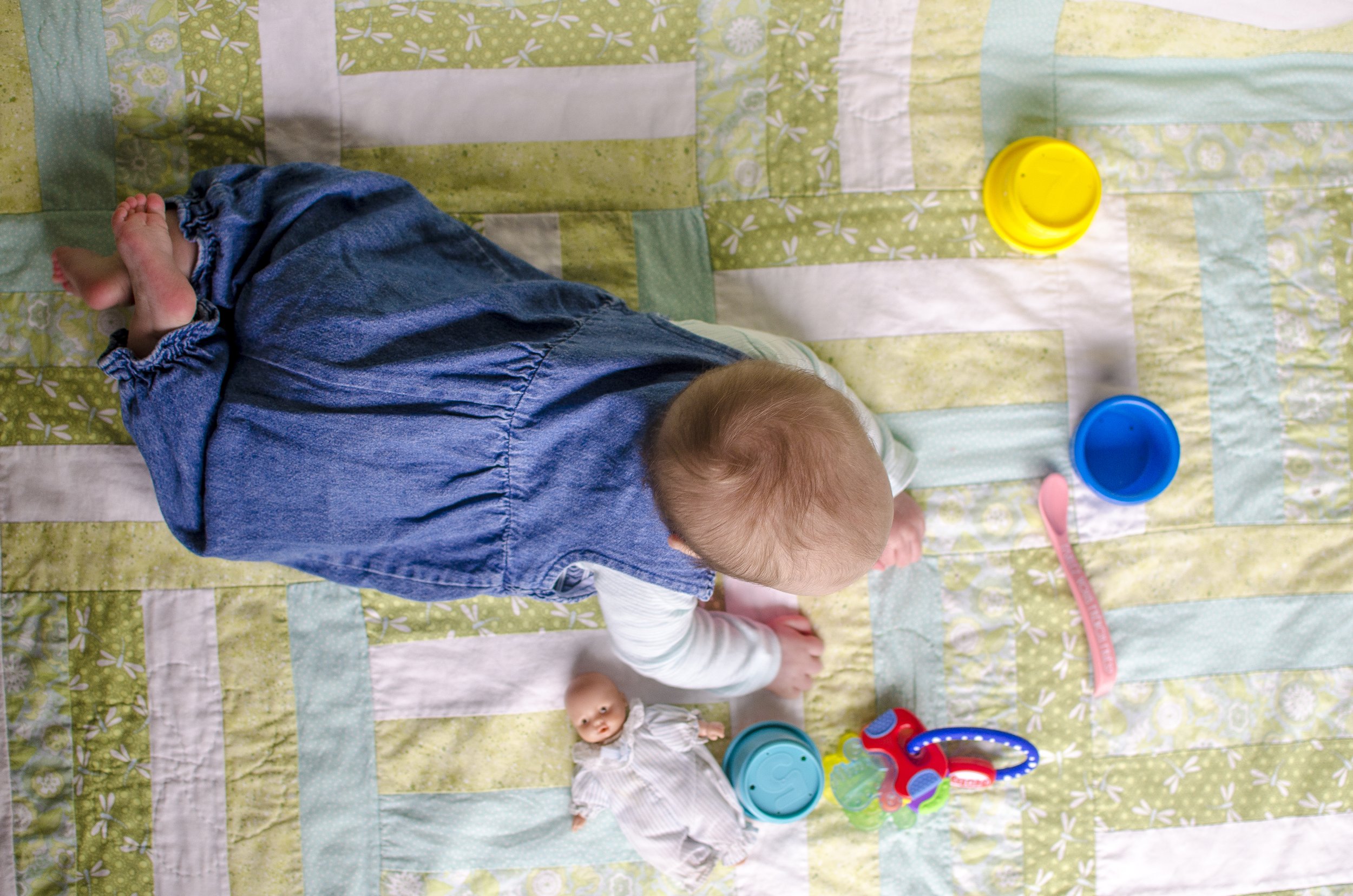
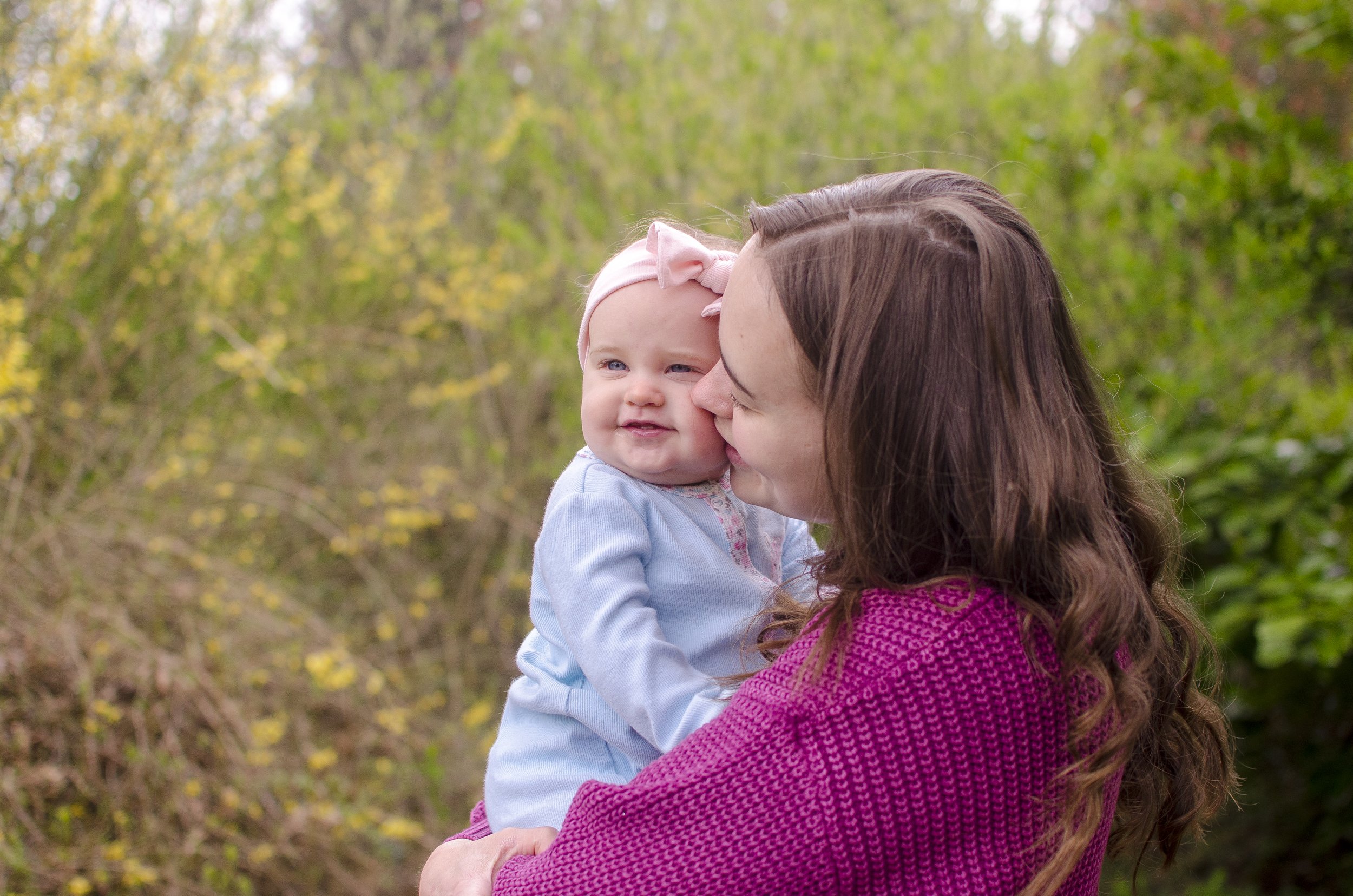
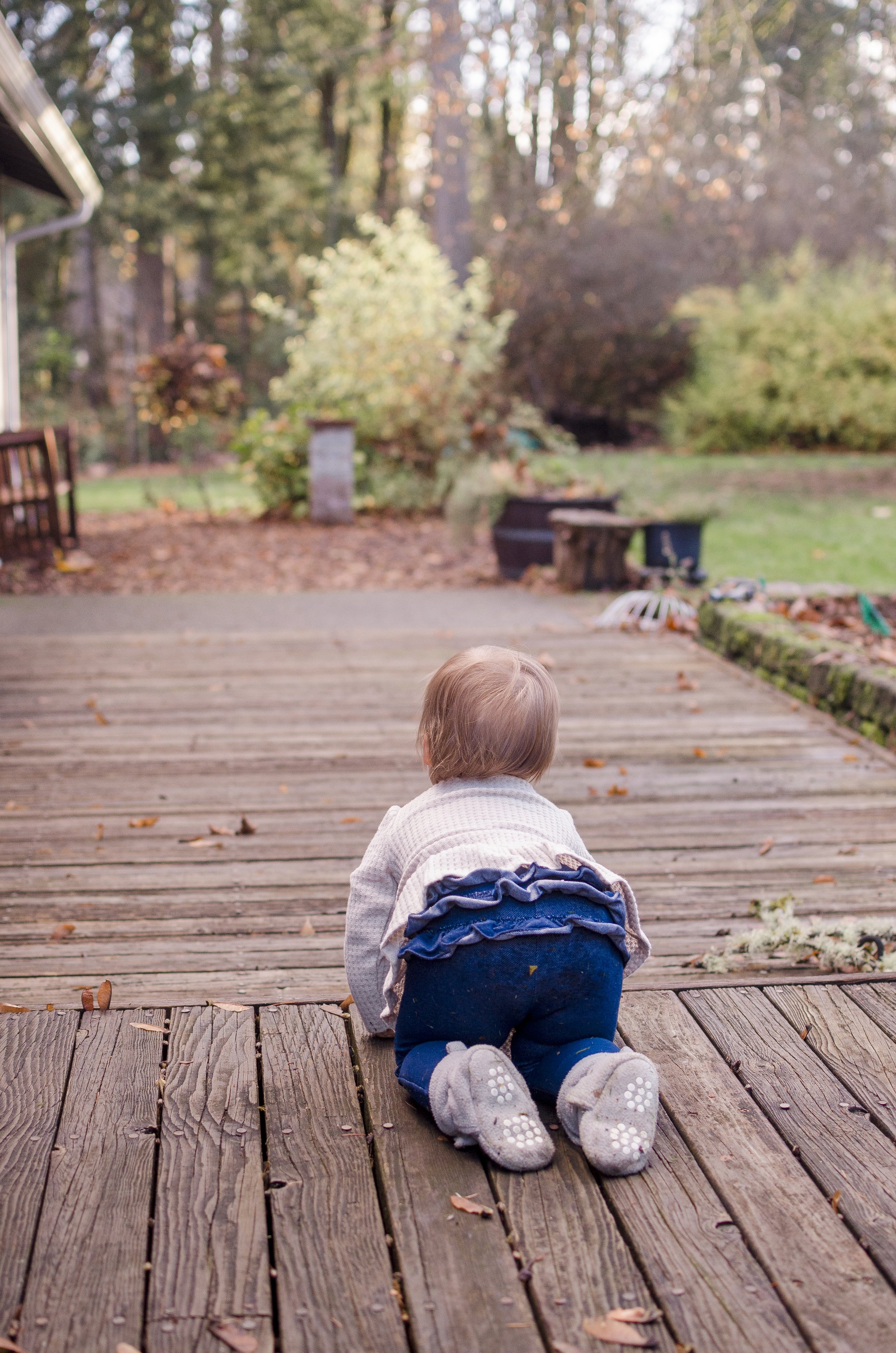
People smile at me when I carry Clara into church on Sunday mornings. Sometimes they say hello to her, or they remark on her pretty eyes. They’ll chuckle as they watch her race between the pews after the service, with me close on her heels; they’ll stop to talk to her if she slows down long enough. Somewhere on the other side of the sanctuary, my husband is in a group conversation about work or construction or pigs. Maybe they’re even asking him when he’s going to have another kid.

Meanwhile, I wonder if I accidentally wore my invisibility cloak.

Church is far from the only place I’ve felt this way. In fact, I’ve walked into my workplace with Clara and had the exact opposite experience: My coworkers chatted me up like they usually do, but they acted like Clara wasn’t even there. When I work my weekly shift, almost no one ever asks me how my daughter is, or refers to her at all. It’s as if she doesn’t exist—and I wonder, did I wear my invisibility cloak again? Because if she doesn’t exist, I’m not sure that I do; she is such an enormous part of who I am.

It makes sense to me now why women who become mothers often turn wholeheartedly to “mommy culture” for their community and validation in some way. They become mommy bloggers, “momtogs,” and members of unofficial Instagram clubs like #girlmom or #boymom. This is where they can feel like equals, like human beings with voices still worth hearing, like they can bring themselves wholly to the table. It’s also true that things often have to be mom-specific in order to be mom-friendly: We go to young moms’ Bible studies because they’re usually the only ones that offer childcare, or that don’t take place during the bedtime routine.

And there is a lot of good that comes from moms of young kids enjoying, empathizing with, and learning from relationships with other moms in a similar boat.

But the dark side is that it can be incredibly isolating, and it can rob the community as a whole of a wealth of wisdom and opportunity.

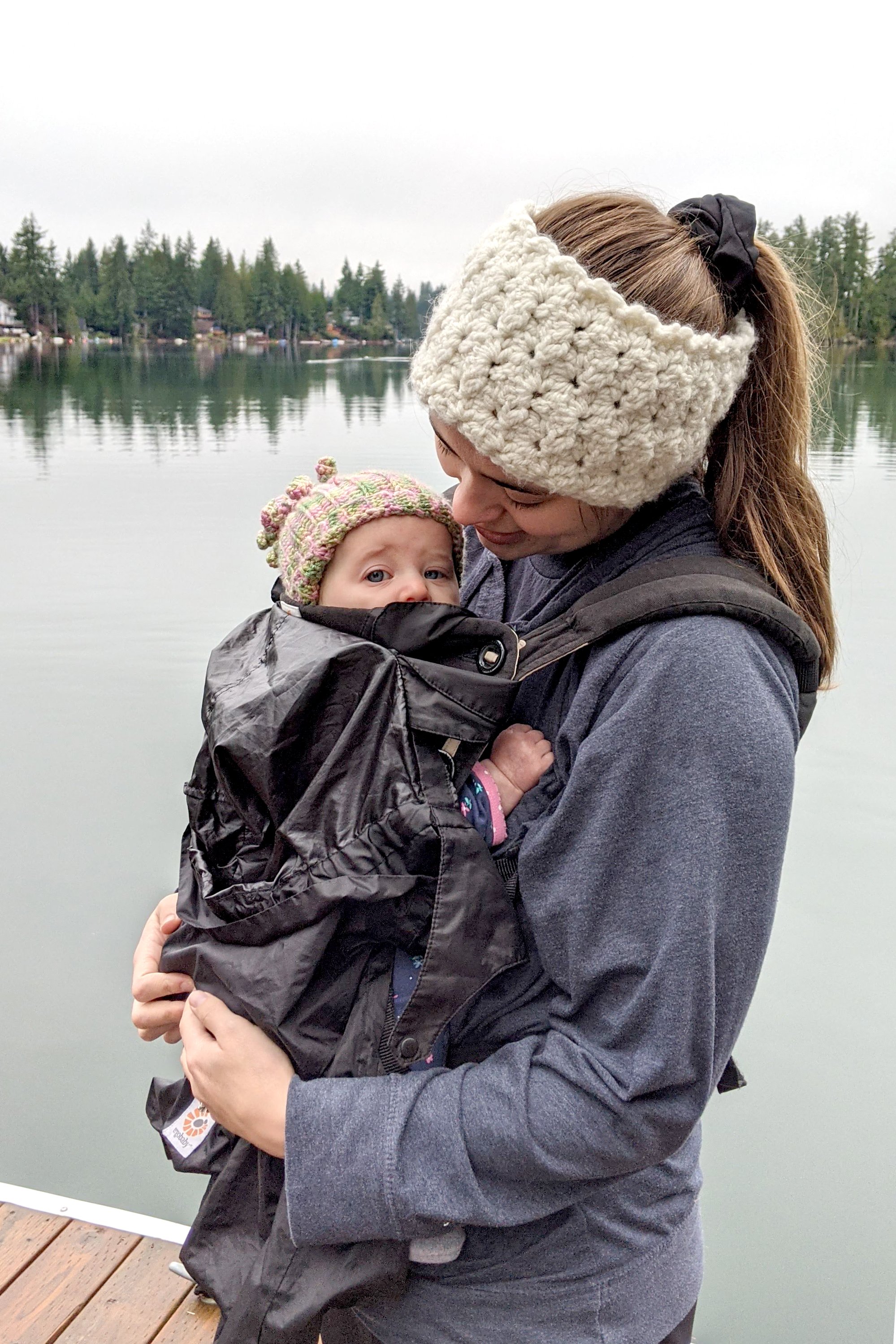
When I’m at church, wrestling my squirmy 19-month-old and my giant Bible in my lap and hoping she doesn’t yell “Puppy!” when her stuffed dog falls on the floor, I often have no idea why I’m there—a sentiment which only intensifies when I don’t get to say more than hello to a single soul after the service is over. When I’m at work, trying to hold a conversation with my childless manager about Formula One racing or build rapport with my college-aged coworkers, I often feel like a fish out of water—flopping all over the place trying to get some oxygen, but all I can find is air. And when I’m at home, cycling through the daily routine of mealtime and playtime and naptime and bedtime, I often just feel alone—like I’m the only mom who has been both completely changed by motherhood and is also still the same person who wants to have winding Bible-nerdy conversations, who has interests outside of her child, who needs friends.

I can’t help but think that our churches and workplaces and neighborhoods and nation would be a lot richer if we welcomed mothers in a way that goes beyond a potted plant on Mother’s Day. If we treated them like whole people with thoughts, opinions, voices, desires, dreams that both include their children and extend beyond them. If we asked them to participate and contribute, even if the answer will most likely be, “Sorry, I can’t, I have the kids” or “Sorry, I can’t, that’s naptime.”

There’s so much I want to do and share and be a part of. There always has been. Having a baby hasn’t taken those things away—it’s actually added to them, clarified them, made them more urgent. It just seems like now there’s an extra barrier to overcome in doing so, because now I’m invisible.

Is a lot of this on me? Definitely. I’m shy and quiet already, and a cute toddler is an easy shield to hide behind. I was working hard to break out of my shell and put down roots in my church when pregnancy and the pandemic came together as the perfect storm of excuses to stay in my comfort zone. And there have been many weeks I’ve skipped out on community-building activities just because wrestling the squirmy 19-month-old seemed too overwhelming.

But I’m trying, and I’m going to keep trying. Thankfully, my Jesus is famous for being the One who sees the invisible.
reflections on life and 2021

Years-in-review are some of my favorite posts to write and to read, but I was surprised to go back over my blog archive and find that I’ve only posted any kind of review for three of the last five years, and each one has looked different. The first was a meticulous month-by-month breakdown that reminds me of coming of age and how simple my life used to be as a 22-year-old newlywed, not yet wounded by traumas I couldn’t have imagined then. The next year, instead of looking backward, I wrote a forward-looking intention to live thankfully—an intention that would be tested beyond my deepest fears. Perhaps because of the rawness of those wounds, I skipped a year and then came back in 2019 with an impersonal roundup of favorite posts. And last year, silence.

In other words, I come to the end of 2021 with no real template to follow and no sure direction to go. So when Tsh Oxenreider (one of my favorite, longtime follows—her current podcast “A Drink with a Friend” is a delight) shared her list of 20 questions to ponder on New Year’s Eve, I was inspired to select a few for what will be yet another different-style year-in-review.

What was an unexpected joy in 2021?

I’d say “Clara,” because she is a joy, but that was not unexpected. So instead, my short answer is “Parenting.”

It was my first full year of parenting (if you don’t count spending all of 2020 in the trimesters of pregnancy and newbornhood). A woman on a podcast I was listening to earlier this week said something that resonated with me profoundly: “Many people view having children as constricting, but for me it is an expansion.” I was surprised, as someone who once deeply feared how having kids might limit my life, to realize how much I agreed with her. Having Clara has made the logistics of certain things more complicated and limiting, like flying across the country or even just going to the grocery store, but she has allowed me as a person to expand.

She has inspired me to examine my life and make it more of what I’d like it to be. She has reminded me that time is short and living in the past or the future is pointless, but what we do today matters. She has shown me what it is to wake up every day eager to discover and smile and live. And when she’s upset and I comfort her, it’s like I get to return to a moment in my own history where I didn’t experience that kind of compassion, and do it over.

Just the other night she saw me in tears and came over to give me a big hug and share her dear friend, Mrs. Bunny, with me. It was strangely educational for me to witness how she noticed and responded to my emotions—no hesitation, no judgment, no codependency, no trying to fix it or minimize it. Not even an awkward sense of “What do I do?” Just a hug, an open heart, and open hands.

I did not expect that both modeling for and learning from my toddler would be such a joy.

What was an unexpected obstacle?

Everyone says when you have kids you’ll “never sleep again”—a notion that I strongly take issue with, because good sleep habits start young and we are all created with a biological need for sleep. And Clara has been a fantastic sleeper ever since we got her feeding issues resolved around 3 months old.

So getting clobbered by severe insomnia (something I’ve never had in my entire life) early in 2021 was not the kind of obstacle I expected to be dealing with. It only got more complicated when it turned out to be a flashing red warning sign of my as-yet-untreated postpartum depression, because then I had to navigate around the obstacle of myself, who was living in denial and petrified of trying medication.

But if anything will make you try literally anything, it’s the torment of lying wide awake all night knowing that you do not have the luxury of taking a nap the next day. For the record, Zoloft probably saved my life and my marriage, and I’m glad I finally took it. I’m also glad that now I’m weaning off. :)

What was your biggest personal change from January to December of 2021?

“Personal” can mean a lot of things, so it’s hard to choose a direction to go with this question, but what first springs to mind is how drastically I’ve changed my approach to exercise over the past year. I’ve been a longtime cardio HIIT person, starting with Jillian Michaels’ 30-Day Shred probably ten years ago. From there I had phases of using PopSugar Fitness, FitnessBlender, Sarah’s Day programs, and many of my own plyometric cocktails, all the way up until the week before Clara was born.

When I jumped (literally) back into it at 2 months postpartum, I realized that in much more profound ways than I expected, my body wasn’t the same as it used to be. My joints and ligaments were still loose, my knee got sore, and everything in my body said “No, thank you.”

It took a few months to figure out where to go from there, but eventually I happened across an at-home weight lifting oriented Instagram account called @built.by.becky, and I signed up for her summer challenge beginning July 4th. I’ve been following her programs for six months now (the next challenge starts on Monday!) and I feel like I’ve found where my body wants to be. I’ve gained more muscle strength and cardiovascular endurance doing this than I ever did with HIIT, and it’s without all the jumping and jostling that my joints hate!

What was the best way you used your time this past year?

There are so many things I could choose to say here, from the hours I’ve spent reading stories to Clara to the naptimes I spent cultivating my flower garden to the short-but-sweet moments in the middle of the night when I prayed Numbers 6:24-26 over various members of my family. So many seemingly-unimportant activities weave together to make up the most important parts of life. Picking “the best” one is hard.

I guess I’ll say the best use of my time in 2021 has been, and really has always been, learning. It might be by asking questions, reading books, observing situations, taking riding lessons, traveling, trying-and-erring, or listening to podcasts—whatever the method, and whatever the outcome, the time isn’t wasted. I have learned about communication by communicating poorly. I’ve learned about emotions by observing Clara’s, which are (as yet) so delightfully unadulterated by fears of what people might think. I’ve learned where to find resources on Old Testament-era culture by asking one of my pastors, and I’ve learned about that topic itself by reading the books he recommended to me.

For a long time, I had a bizarre expectation of myself to just know everything. I thought I was supposed to know what to do in any given situation even if I’d never faced it before. I thought I was supposed to know the answers to all my questions without needing to ask someone else. I thought I might be looked down on if I got caught not knowing how to act, what to say, how to dress, or what I thought.

It’s been so freeing to realize that I love to learn and was made to learn, and no one is going to berate me for that.

What was the biggest thing you learned this past year?

That I can make decisions and changes without anyone else’s permission or validation.

I’ve noticed a pattern among new parents that I catch myself falling into at times: the tendency to vigorously share and re-share anything on the internet that agrees with the way I’m doing things for my kid, while also vigorously refuting or mocking or eye-rolling at anything that disagrees.

There are entire Instagram accounts, Facebook pages, blogs, and websites that have been built solely on the furious clicks, comments, and shares of insecure parents who just need someone to tell them they’re “better” for the way they’ve chosen to do things. If you’re afraid sleep training is going to ruin your attachment with your child, there are plenty of people with “Doctor” or “Consultant” in their titles that will reassure you that only evil, selfish people sleep train; if you’re on the flip side, there are plenty of people who will tell you anyone who doesn’t sleep train is actively damaging their child’s growth and development. The same kinds of dichotomies exist for how and when to introduce solids, how and when to potty train, whether or not to use sign language with your baby, using punishment vs. “gentle parenting,” and even choosing to have an only child vs. choosing to have more than one.

And it all comes down to this desperate need for someone to tell us we’re doing it right—usually by telling us someone else is doing it wrong.

I’ve learned, or rather I am learning, how silly and unnecessary this is. Children aren’t mass-produced on an assembly line in a factory, so the idea of one right way and one wrong way to do anything is absurd. As the classic Princess Bride line goes, “Anyone who says otherwise is selling something.”

I can decide what’s best for Clara without getting the input of her pediatrician or a research paper on child development or the whole Internet, because she’s the only Clara in the whole wide world, and only God knows her as well as I do. And when “what’s best” changes (because she’s not a robot—she changes), then I can change it—without having to share ten colorful infographics about why such a change was obviously right.

Parenting is where I’m realizing this most right now, but it extends far beyond. I can disagree with someone’s theology without considering them damned or needing them to change their minds. A person can vote completely opposite me and not be stupid or bad. If my husband and I get into an argument, it doesn’t mean he’s toxic or that we need to get a divorce.

We are all just people, and we’re all different. Sometimes those differences create conflict, but it doesn’t have to be codependent, egotistical conflict. We’re allowed to stand firm and secure in our own thoughts, feelings, and opinions without needing everyone else to get on board.

Here’s to a new year filled with more unexpected joys, more sleep, and learning more new things. Happy 2022!

little children, guard yourselves from idols

Before I begin, I will say first: I am writing this to me. I hope it encourages or rebukes you, too, if that’s what you need, but I’m writing it first to me.

Over the last few months, what little I have written has been my effort to process the enormous and sometimes all-consuming topic of the pandemic, and what it means to live at this moment in history as a follower of Christ. I’m hardly the only one. There are probably millions of memes and Twitter hot takes and longform articles on the Internet right now devoted to the same topic, and they all say something different.

Some say taking a mandated vaccine is akin to receiving the Mark of the Beast. Some say wearing a mask is the only way to love your neighbor. Some say we are shortsightedly throwing away the religious freedoms that the first colonists of this continent endured immense tribulation to establish for us.

In other words, there is no consensus. There is no unity. The voices of the Church are just as divided as the voices of government. Those of us who are trying to hear them all out are being pulled in a dozen different directions, and it’s no wonder that so many of us have given up on discourse, picked a thought bubble to occupy, and stayed there.

But as delightful as that sounds to me, I have too many questions, and they won’t let me rest.

I don’t think the vaccine is the Mark of the Beast, but the intense peer pressure, financial pressure, and governmental pressure currently being exerted on the unvaccinated has shown me how simple it would be to implement the Mark of the Best one day, and how difficult it would be to resist. When we choose whether or not to get the Covid-19 vaccine, most of us are not choosing between allegiance to God and allegiance to this world; however, the question is still worth pondering: What does it look like to live in absolute allegiance to the authority of the True King at this time? What does it mean for me and my house to serve the Lord?

Does it mean I wear a mask everywhere I go? Some would say yes—that the most loving thing I can do for those around me is to protect them from my breath, although the effectiveness of most masks is scientifically dubious. It’s true that I don’t know what kind of vulnerabilities others may have to the virus, or how they’d be affected if they caught it. I have no desire to be unknowingly responsible for someone else’s illness, let alone their hospitalization or death, however unlikely. But is it true that the primary way to love my neighbor is to protect their health? Sometimes we seem to think that Jesus Himself would go to any lengths necessary to protect the health and safety of others, but if that were the case, how could He ever have asked anyone to follow Him? To follow Christ was, for every single one of the apostles and many of their converts in some way, to follow Him through suffering, ostracism, and death.

It would be silly to equate not wearing a mask with calling others into Christ, of course. But I do think we need to examine ourselves for an ungodly aversion to pain, including the pain of others, if we want to be truly Christlike. When Paul set out to evangelize the known world, he could not afford to fear the fact that he was inviting people into persecution—the eternal state of their souls had to be more important than the temporal safety of their bodies. Christianity has never been a path to safety and comfort, as our brothers and sisters in so many other countries know too well.

At the same time, only from our couches of prosperity does being required to wear a mask in public places feel like persecution! What will our response be when real persecution arises? What should it be? It’s certainly not wrong to try to protect and preserve the freedoms that we enjoy; these freedoms in turn protect current and future generations of all faiths from oppression, and create a haven in the world for those who wish to practice their faith without repercussions. At the same time, we can completely neglect the real mission of Christ on earth while we are busy championing the mission of freedom. They do not always serve the same ends.

I’m asking these questions because I see too few questions being asked. I see many, many Christians unquestioningly toeing the party line on either the left or the right, failing to test the narrative they’re being fed against scientific facts and Scriptural truth. For some of them, mask-wearing and vaccine-touting have become like pagan rituals—things we do to cover our bases “just in case,” to look like we are doing our part to control the uncontrollable even when our actions don’t make sense, all to appease the unseen Covid-19 virus in hopes that it will pass over our house. For others, rebelling against the regulations has become its own kind of religion, whose sacred text is merely “whatever is opposite of what the government commands.” Both of these belief systems are anti-Christ.

What if we could all stop weaponizing Christianity against those who disagree with us, and instead choose fearless love that welcomes others into our hearts and homes, whether we feel “safe” or not?

What if we could all stop using Jesus to justify our misplaced need for control, and instead choose to walk with Him—even when His path winds through the Valley of the Shadow, whatever that may look like?

I don’t advocate for prideful science-ignoring recklessness that disregards the opportunities we have to protect ourselves and others, nor for history-ignoring idealism that disregards the importance of protecting our liberties. But I am pleading with the Church to lay down her idols, whether they take the form of a political party, individual rights, personal safety, fear of loss, or anything else.

We know that we are of God, and that the whole world lies in the power of the evil one. And we know that the Son of God has come, and has given us understanding so that we may know Him who is true; and we are in Him who is true, in His Son Jesus Christ. This is the true God and eternal life.

Little children, guard yourselves from idols.

1 John 5:19-21